


Umrah - fit
12 Days Umrah Taif Awal Madinah UMR-12D-A01
$4,190.00 SGD

🔥 UNBEATABLE UMRAH DEAL 12 DAYS FROM JUST $3820 SGD!!! - with 5* Hotels <100m to masjidil Haram, Fullboard Meals, Ziarah etc - Fully Guided, Luxury, STRESS-FREE! Perfect for busy professionals & school holidays! Focus ONLY on your ibadah—we handle EVERY detail.
Hotels Options
Description
12 Days Umrah Taif Awal Madinah
Embark on a spiritually fulfilling journey with our premium 12 Days Umrah + Taif Awal Madinah package, carefully curated for pilgrims departing from Singapore. This all-inclusive pilgrimage itinerary is designed to give you complete peace of mind, handling every logistical detail from flight bookings and visa processing to expert-led spiritual guidance. Stay in luxury accommodation steps from the holy mosques and focus entirely on your ibadah while our experienced team handles the rest.
⭐⭐⭐⭐⭐ 4.9/5 STARS REVIEW
- Trusted by thousands of happy pilgrims & families!
🏨 5★ LUXURY HOTELS
- Just steps away from Masjidil Haram & Masjid Nabawi!
📅 EST. 1983
- 40+ years of trusted service & spiritual expertise!
👥 GROUP DISCOUNTS AVAILABLE
- More savings, more barakah, more spiritual unity!
✈️ TRUE ALL-IN PACKAGES
- Flights + Luxury Hotels + Halal Meals
🌙 100% MUSLIM-FRIENDLY
- Prayer times observed, halal food guaranteed, seamless spiritual tours!
🕋 TRAVEL IN BLESSED GROUPS
- More affordable, more motivating, more memorable—supporting one another in worship!
💰 CHEAPER THAN DIY!
- Our group deals mean MASSIVE SAVINGS—no hidden costs!
🛡️ Your Safety & Comfort is OUR PRIORITY
- We lead with care, ensuring your peace throughout the journey.
❤️ Family-Assured Travel
- Your loved ones at home can have total peace of mind—we treat every pilgrim like family!
Hajj / Umrah / Holiday Tours Made Easy
✨ Your Bridge to Jannah!
- Hahnemann Travel
---
### Plan Your Sacred Pilgrimage With Us
Planning a sacred trip requires absolute trust and reliability.
To ensure this is the perfect journey for your family, you can explore our complete itinerary breakdowns or compare this schedule against our alternative travel seasons by visiting our main [Hahnemann Travel Singapore Umrah Packages] catalog page.
Our dedicated team is always ready to assist you with group bookings or flight arrangements.
📱 WHATSAPP Message TO BOOK NOW:
Click here --> +65 9775 2605
Highlights
Jumeirah Jabal Omar Makkah 5*
Featuring 5-star accommodation, Jabal Omar Jumeirah, Makkah is located in Makkah, est 70 m from Masjid Al Haram.Featuring a fitness centre, the 5-star hotel has air-conditioned rooms with free WiFi, each with a private bathroom. The hotel features family rooms.All units in the hotel are equipped with a flat-screen TV. Each room is equipped with a kettle, while selected rooms include a terrace and others also provide guests with city views. At Jabal Omar Jumeirah, Makkah every room is equipped with bed linen and towels.Breakfast is available daily, and includes buffet, American and vegetarian options. At the accommodation you will find a restaurant serving Mediterranean, Middle Eastern and Moroccan cuisine. Vegetarian, vegan and gluten-free options can also be requested.With staff speaking Arabic and English, guidance is available at the reception.Zamzam Well is 4.1 km from Jabal Omar Jumeirah, Makkah, while Makkah Museum is 4.1 km away. The nearest airport is King Abdulaziz International Airport, 92 km from the hotel.Couples particularly like the location — they rated it 8.9 for a two-person trip.
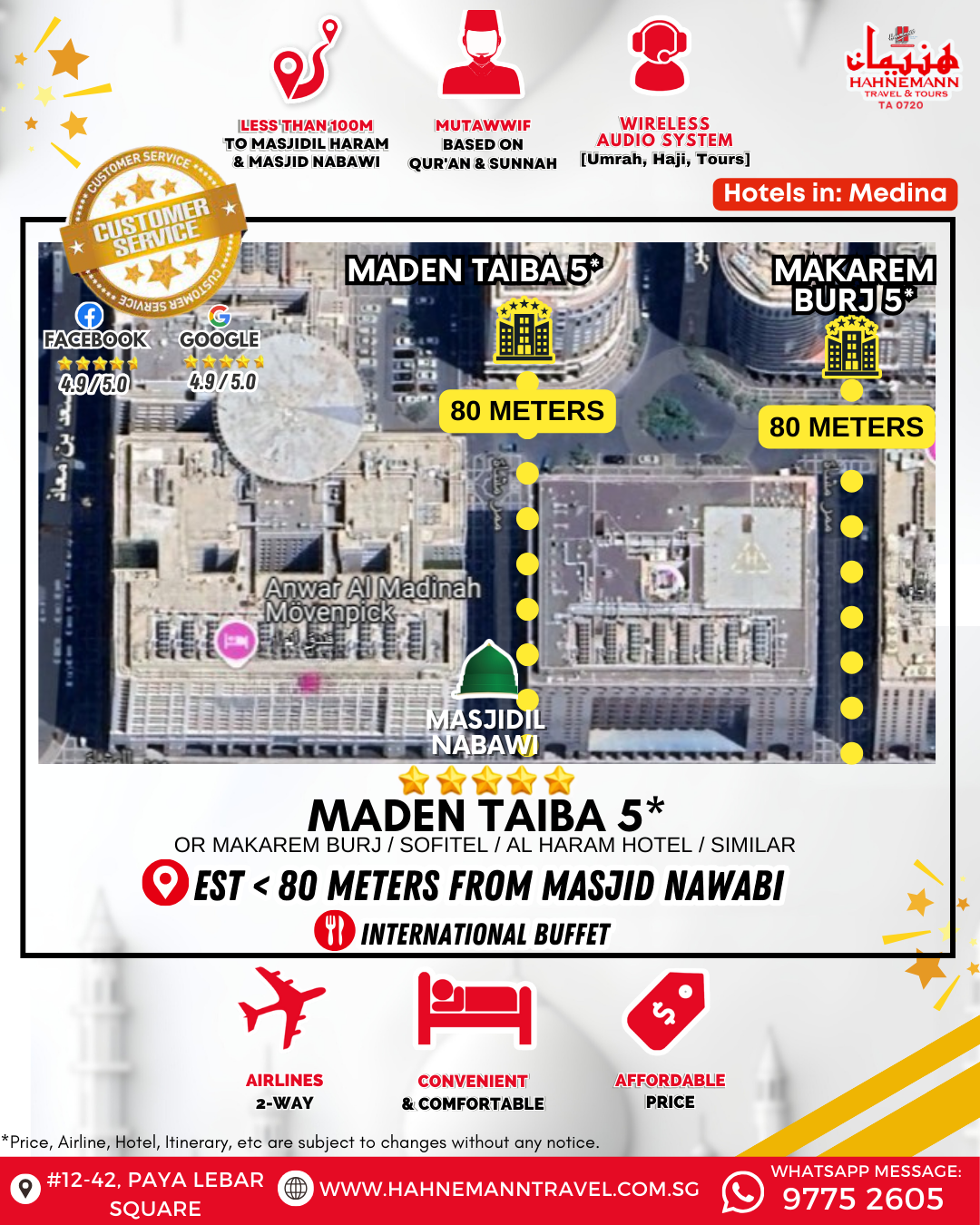
Maden Taiba Premium 5*Hotel | فندق مادن
Maden Taiba Premium 5* Hotel Madinah — est 80metres to Masjidil Nabawi VIP services, dining, and amenities at Maden Hotel. Pinnacle of luxury at Maden Hotel.
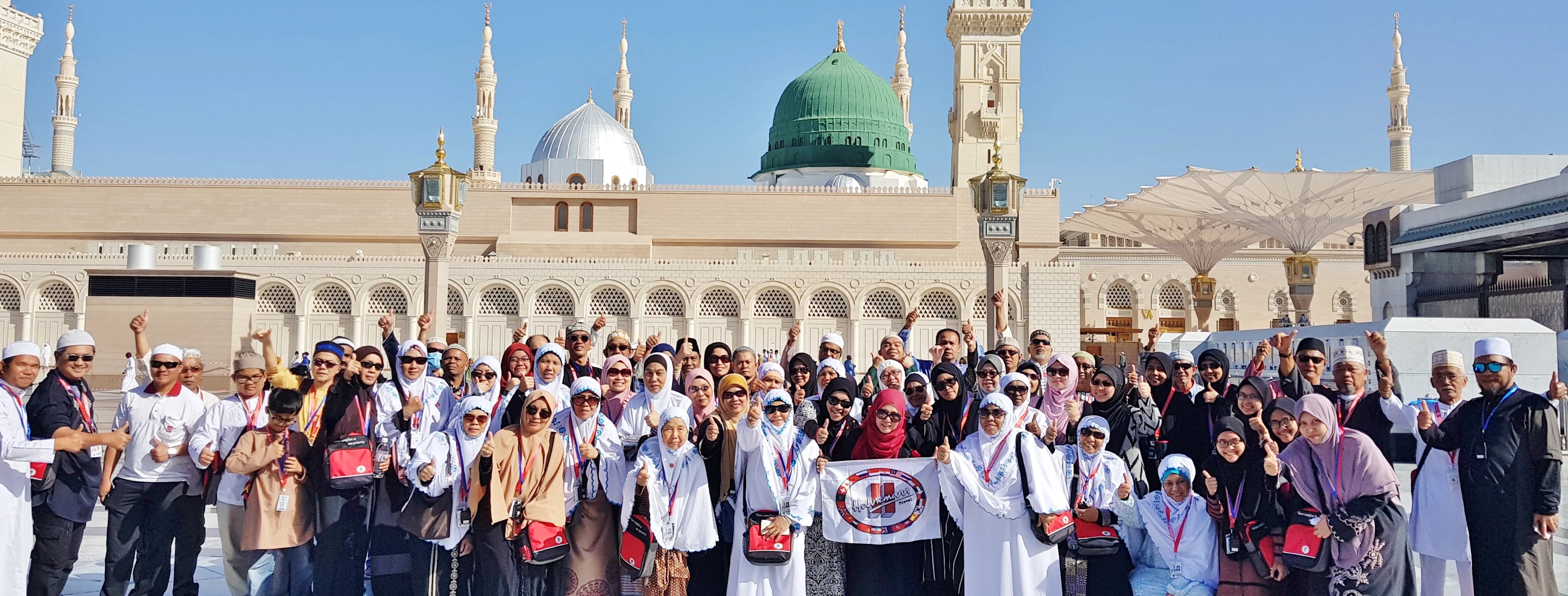
Masjid Nabawi
The Prophet's Muhammad ﷺ Mosque is the second mosque built by Rasulullah ﷺ after the Quba Mosque. It is the second holiest site in Islam, after the Masjid al-Haram in Mecca. Every prayer is Masjidil Nabawi is multiplied by 1000x !It also houses the Gardens of Paradise (Ar Rawdah / Raudah) on earth.Sahih Bukhari, Hadith No 1190:Allah's Messenger (ﷺ) said,"One prayer in my Mosque is better than one thousand prayers in any other mosque excepting Al-Masjid-AI-Haram."-https://sunnah.com/bukhari:1190...Sahih Bukhari, hadith No 1196:The Prophet (ﷺ) said,"Between my house and my pulpit there is a garden of the gardens of Paradise (Rawdah),and my pulpit is on my fountain tank (i.e. Al-Kauthar)."-https://sunnah.com/bukhari:1196...Sahih Bukhari, Hadith No 1189:The Prophet (ﷺ) said,"Do not set out on a journey except for three Mosques i.e. Al-Masjid-AI-Haram, the Mosque of Allah's Messenger (ﷺ) ,and the Mosque of Al-Aqsa, (Mosque of Jerusalem)."-https://sunnah.com/bukhari:1189...Sahih Bukhari, Hadith No 1871:Allah's Messenger (ﷺ) said,"I was ordered to migrate to a town which will swallow (conquer) other towns and is called Yathrib and that is Medina,and it turns out (bad) persons as a furnace removes the impurities of iron.-https://sunnah.com/bukhari:1871...Sahih Bukhari, Hadith No 1876:Allah's Messenger (ﷺ) said,"Verily, Belief returns and goes back to Medina as a snake returns and goes back to its hole (when in danger).-https://sunnah.com/bukhari:1876Madinah is the gathering-point of the Muslims in the beginning and at the end. An-Nawawi (may Allah have mercy on him) said:“Faith will retreat to Madinah” – what is meant is that this is how faith is in the beginning and at the end, because at the beginning of Islam, everyone whose faith was sincere and whose Islam was valid came to Madinah, either as a Muhajir (migrant) coming to settle there, or out of a longing to see the Messenger of Allah (ﷺ),andto learn from him and be near to him; then after that, at the time of the caliphs, people did the same, so they came to learn about the straight path from them and follow the example of the majority of the Companions (may Allah be pleased with them) living there;then after that, they came to learn from the scholars of Madinah who were a shining lamp of that era, and the Imams of guidance, to learn Islam and the Sunnah of the Messenger of Allah (ﷺ) that the Companions narrated to subsequent generations….Therefore everyone who was steadfast in faith and at ease with it would travel there. “(Sharh An-Nawawi ‘Ala Muslim, 2/177).Sahih Bukhari, Hadith No 1877:I heard the Prophet (ﷺ) saying,"None plots against the people of Medinabutthat he will be dissolved (destroyed) like the salt is dissolved in water."-https://sunnah.com/bukhari:1877...
Masjid Quba
Spiritual pilgrimage site thought to date from the prophet Muhammad’s time in the 7th century CE.
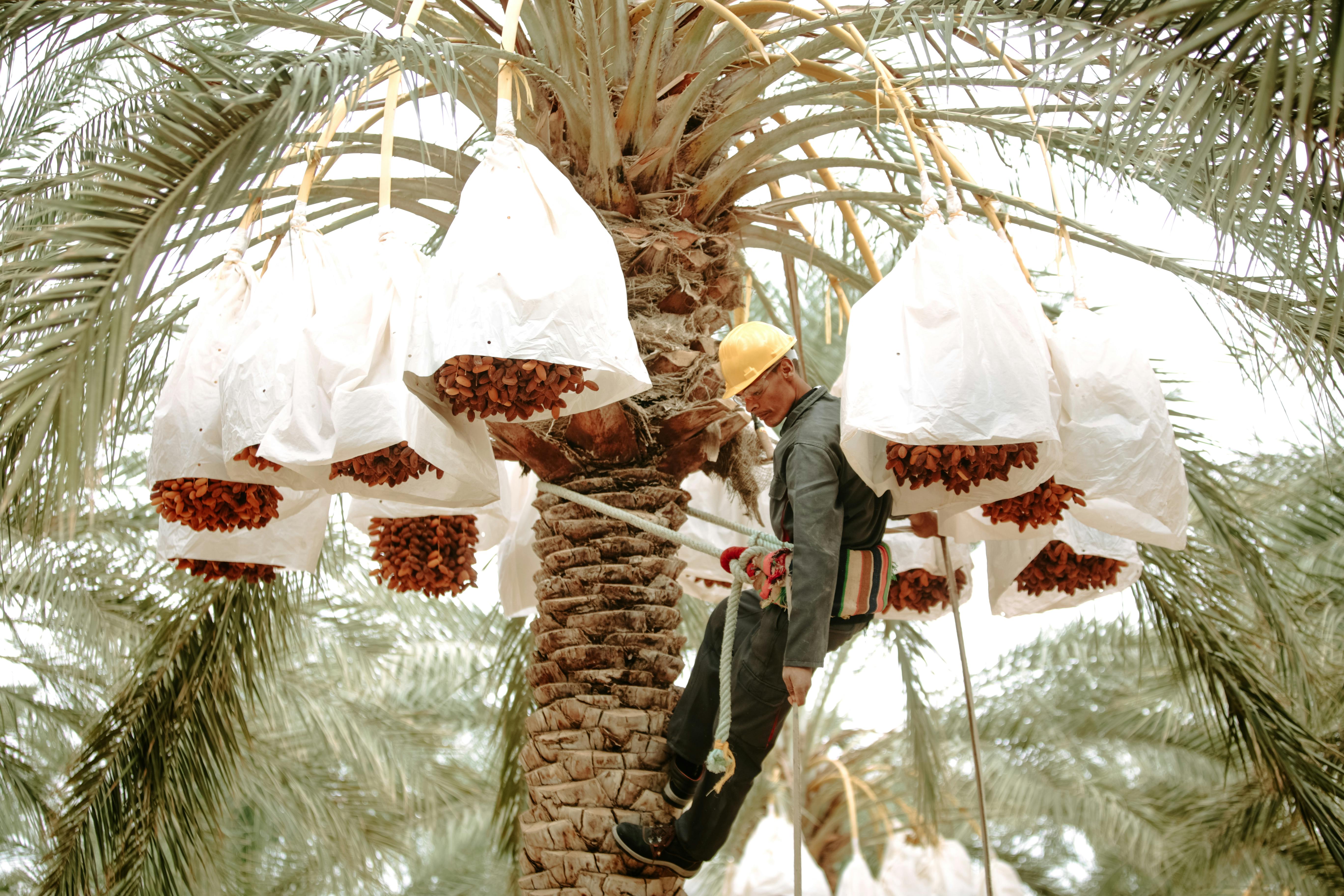
Salman Al Farsi Farm
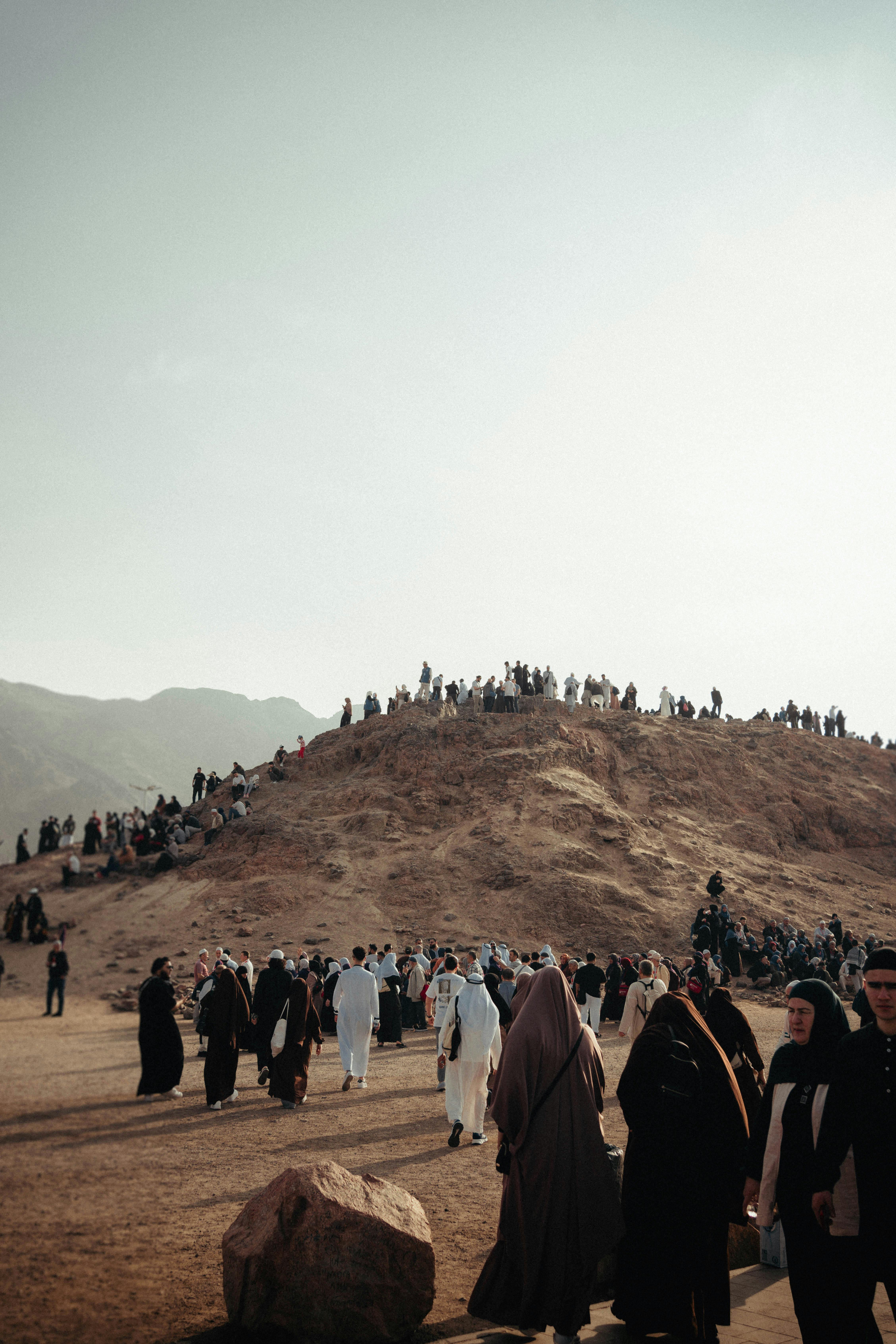
Uhud Mountain
Imposing, rocky ridge & site of the 624 CE Battle of Uhud between the Meccan army & early Muslims.
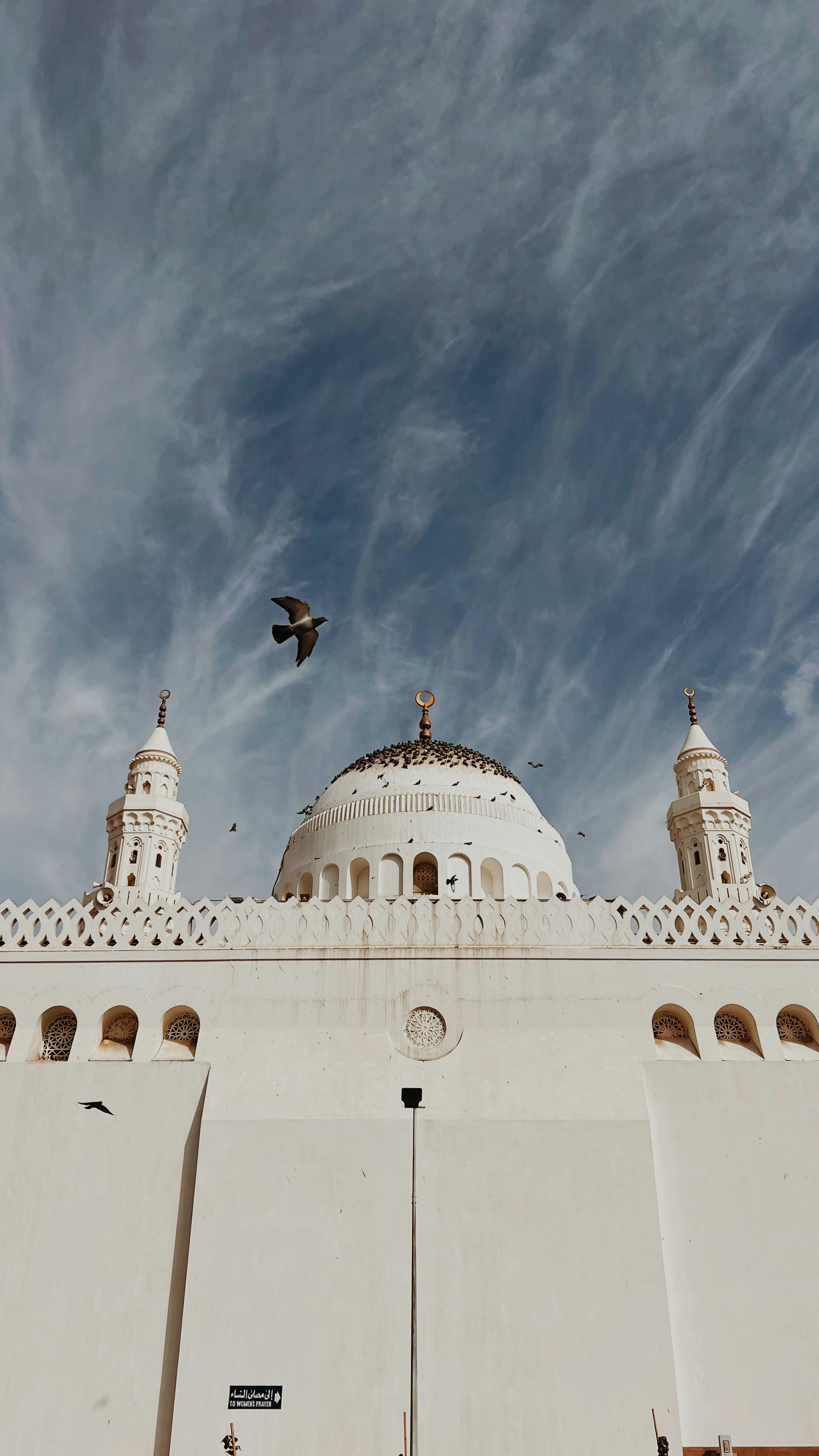
Masjid al-Qiblatayn
Twin-towered mosque where the prophet Muhammad redirected prayer from Jerusalem to Mecca in 624.
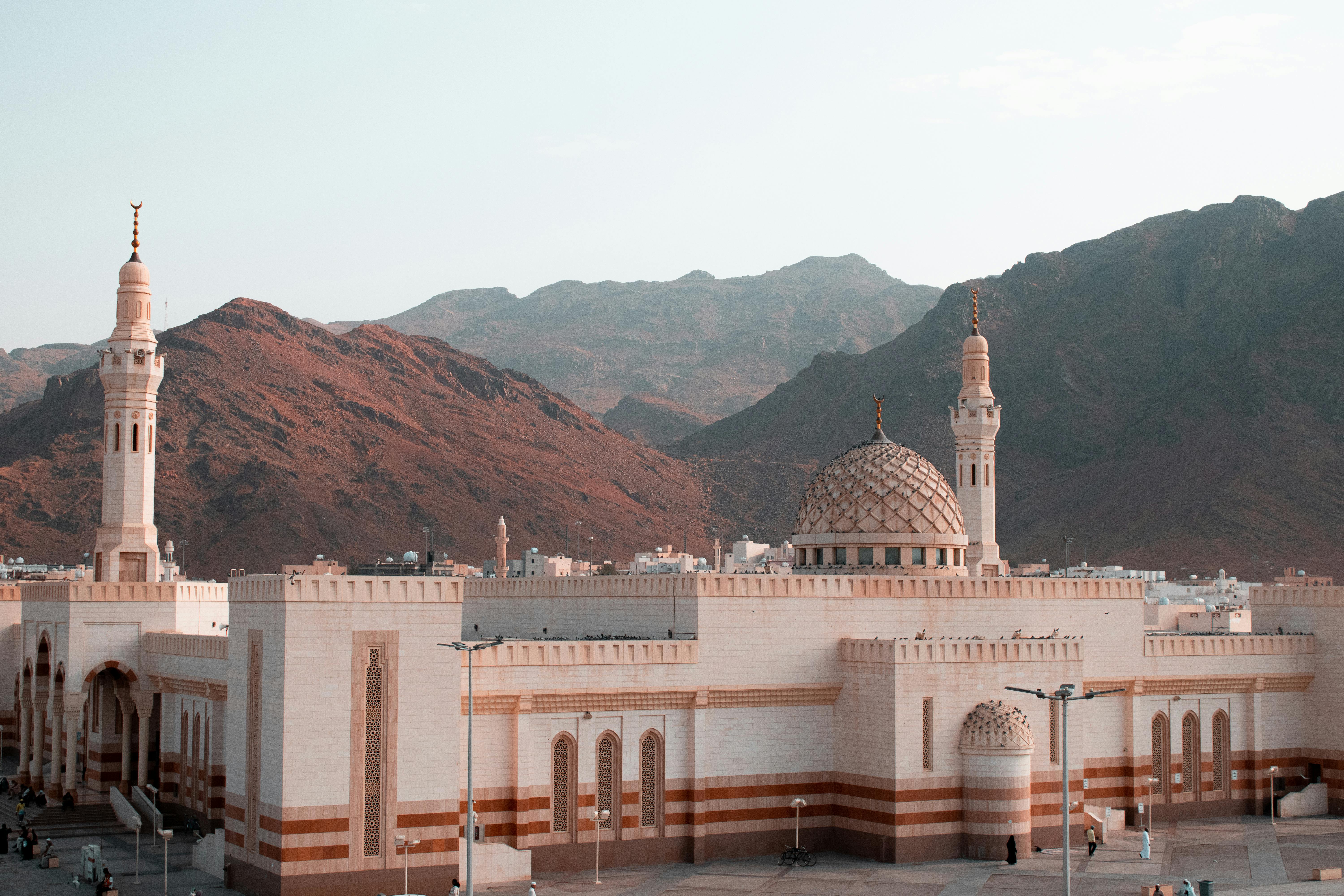
The Seven Mosques (Khandaq Mosque)
Striking place of worship with twin minarets backed by rugged cliffs, the site of an ancient battle.
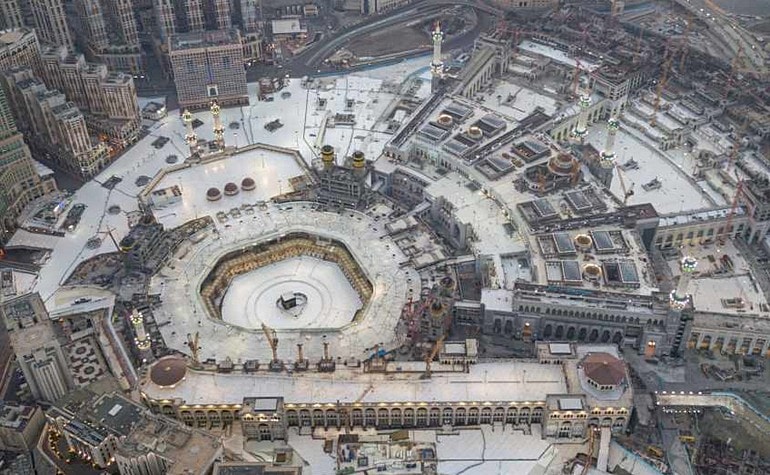
Masjid al-Haram
Known as the Great Mosque of Mecca, is a mosque in Mecca, Saudi Arabia, serving as the holiest and most important mosque in Islam.

Jamrah Al Aqabah Al-Kubra

Mosque of Al-Ghamama
Centuries-old stone mosque said to occupy the site where Prophet Muhammad performed the Eid prayer.

Al Baqi Cemetery
Jannatul Baqi is the oldest and most sacred Islamic cemetery in Medina. It holds over 10,000 companions of Prophet Muhammad (PBUH), including many family members and early leaders, with graves marked only by simple stones. 4th Caliph Uthman ibn Affan, Ahl al-Bayt members such as Hasan ibn Ali, daughters Zainab, Rukayya, and Umm Kulthum, along with Imam Zayn al-Abidin, Imam Muhammad al-Baqir, and Imam Ja'far al-Sadiq. Many wives of the Prophet (Aisha, Umm Salama, others) and his aunt Safiyyah are also buried here

Wadi al-Baida (Valley of Jinn)
Wadi al-Baida, locally known as Wadi al-Jinn, is a valley and an anti-gravity hill in al-Baida Park located approximately 30 kilometers northwest of Medina in the Medina Province of Saudi Arabia. It is renowned for a "gravity hill" phenomenon where vehicles in neutral gear appear to move uphill on their own, often attributed to optical illusions or magnetic anomalies.

Railway Museum (Hijaz Railway Museum)
Historic Ottoman train station showcasing antique train cars & relics from Medina's heritage. The station was opened in 1326 AH (1908), and it is one of the railway’s most prominent stations and its nal station. During World War I, the station was intermittently closed until it halted permanently in 1921. The Al-Suqya Mosque is located within the station walls. It was named after the nearby Al-Suqya Well, from which the Prophet Mohammed (ﷺ) performed ablution while heading to the Battle of Badr, prayed, and supplicated for the well-being of the Muslims of Madinah. During his governorship of Madinah, Umar bin Abdul Aziz, may Allah bless his soul, built this mosque on the site where the Prophet (ﷺ) prayed.

The International Fair and Museum of the Prophet's Biography and Islamic Civilization
a world-class interactive museum dedicated to presenting a comprehensive and authentic introduction to the noble life of Prophet Muhammad ﷺ, his values, ethics, and conduct, while highlighting the true message of Islam. The museum is located in the Haram district, adjacent to the Prophet’s Mosque in Madinah, and is supervised by the Muslim World League. It was officially inaugurated on 21 Jumada Al-Akhirah 1442 AH, corresponding to 3 February 2021. The museum houses more than 500 artifacts and crafted pieces related to the Prophetic era, presented through an educational narrative supported by the latest technologies.
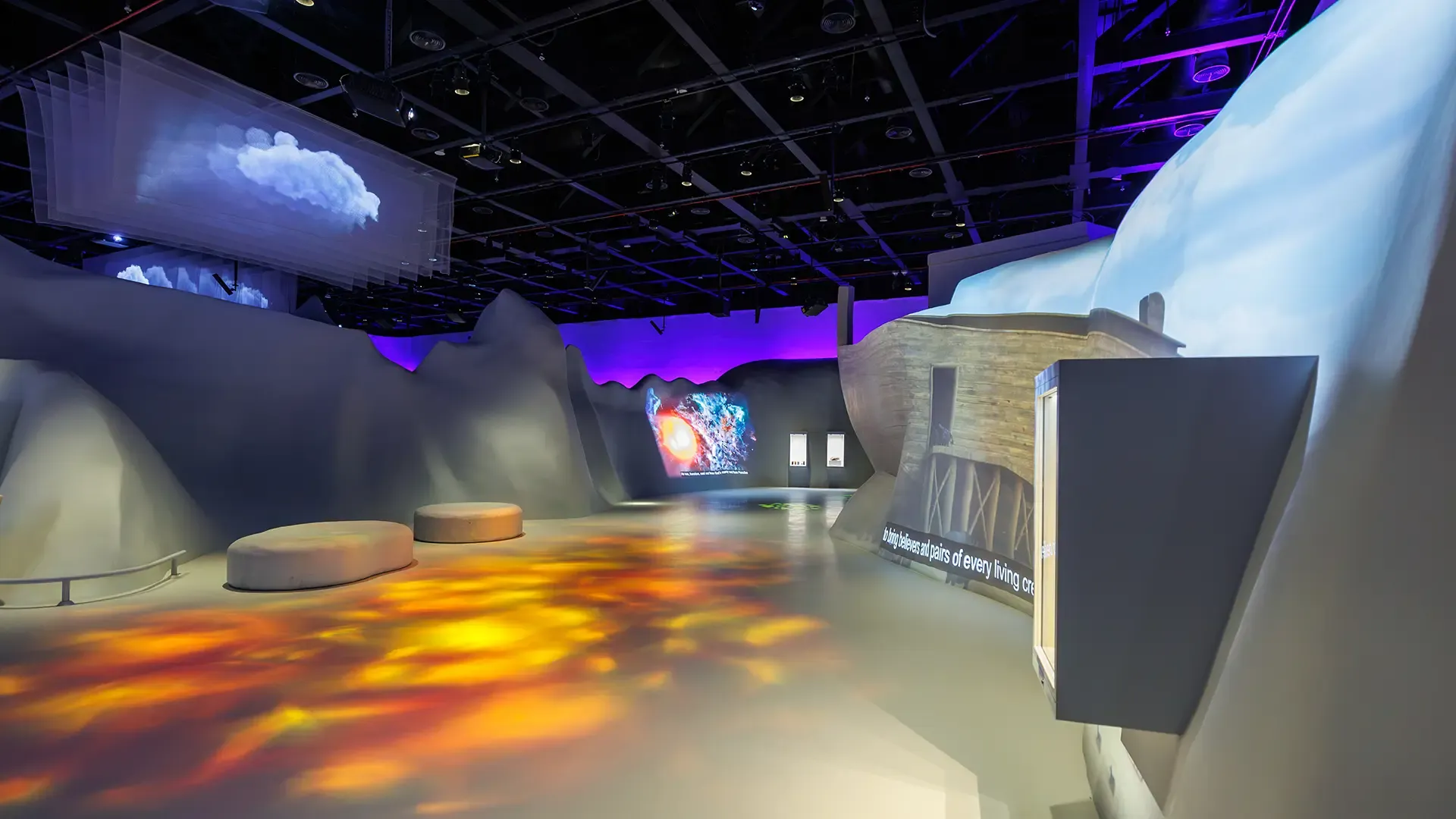
As Safiyyah Museum & Park
Creation Story Museum - A digital museum, located on two floors below the garden in As Safiyyah Park & Museum, deals with the story of creation from the beginning, through the creation of the universe and the sending of the prophets, until the end of the world, through a narrative that juxtaposes the latest display technologies, in a dazzling experience for visitors.
Haramain High Speed Railway Depot (Medina)
The Haramain High Speed Railway (HHR) depot in Medina, completed in 2016, is a major maintenance and operational hub featuring three large buildings, 24 railway tracks across four yards, and specialized workshops. This facility ensures the technical maintenance of trains traveling up to 300km/h between Medina, Mecca, Jeddah, and KAEC.

Haramain Train Station (Makkah)
The Haramain High Speed Railway connects Makkah and Madinah, with stops in Jeddah, supporting the growing demand for efficient transport for pilgrims, visitors, and residents travelling between Saudi’s major cities. Makkah Station A terminal station serving as a key arrival and departure point for travellers between the holy cities, equipped with travel halls, prayer facilities, parking, and commercial services.
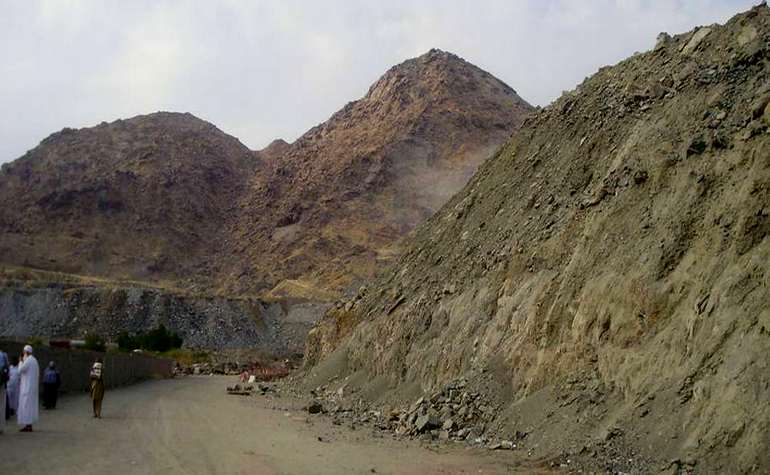
Thowr Mountain (Jabal Thur / Thawr)
Jabal Thawr (Arabic: جَبَل ثَوْر) is a mountain in Saudi Arabia, located in the lower part of Mecca to the south of the district of Misfalah. The mountain is notable for housing a cave known as Ghār Thawr (Arabic: غَار ثَوْر), in which the Islamic prophet Muhammad ﷺ took refuge from the Quraysh, during the migration to Medina. Truth about dove nest and spider web = https://islamqa.info/en/answers/27224/overnight-stay-of-the-prophet-(peace-and-blessings-of-allaah-be-upon-him)-and-abu-bakr-in-the-cave-of-thawr

Masjid Al Nimrah (Masjid Namirah)
Masjid an-Namirah or Masjid Nimrah is a mosque in Wadi Uranah near Mecca in the Hejazi region of Saudi Arabia. • Site of the Farewell Sermon:Masjid Namirah (also spelled Namrah or Nimra) is a historic monument located near the plains of Arafat,- marking the exact location where Prophet Muhammad (ﷺ) pitched his tent,- stood at valley (Batn ‘Uranah) to deliver the Farewell Sermon (Khutbat al-Wida') to over 100,000 companions and led the prayers during his Farewell Hajj in 10 AH.• The Rejection of Pre-Islamic Paganism (Jahiliyyah):- In the immediate vicinity of this valley, pagan Arabs historically held distinct, elitist rituals during the pre-Islamic era.- Tribes who considered themselves elite (Al-Hums) refused to go out to the plains of Arafat like common tribes, staying inside the sanctuary borders instead.- By camping at Namirah and preaching down in the valley of 'Uranah, the Prophet (ﷺ) physically shattered these structural class systems.- He (ﷺ) established a universal standard of equality, declaring on this exact dirt: "An Arab has no superiority over a non-Arab, nor a white over a black, except by piety (Taqwa)."• The "One-Day" Mosque:While it stands as the second-largest mosque in the Makkah province (accommodating up to 400,000 worshippers), it remains empty for virtually the entire year.It springs to life exclusively on the 9th of Dhul-Hijjah (the Day of Arafah) for a single afternoon.• Alternative Historical Names:To demonstrate its profound theological weight, classical historians note that the site has been known by three other major names:1. Masjid Ibrahim al-Khalil (The Mosque of Abraham): (Arabic: مسجد إبراهيم الخليل)- because the Prophet Muhammad's (ﷺ) actions on this exact site were a direct restoration of the original, uncorrupted monotheistic Hajj legacy pioneered by Prophet Ibrahim (peace be upon him) centuries prior.2. Masjid al-Tawbah (The Mosque of Repentance):- Commemorating the mass spiritual clean-slate achieved by the 100,000+ companions who wept and repented together behind the Prophet (ﷺ) on that afternoon.3. Masjid 'Arafah: (Arabic: مسجد عرفة)- Due to its direct visual connection and proximity to the sacred plain.4. Masjid Uranah (Arabic: مسجد عرنة)- because the entire front section of the mosque—including the Mihrab (prayer niche) and the Minbar (pulpit)—is physically located inside Wadi ‘Urana- the name Uranah refers to the valley that sits outside the legal boundaries of Arafat, calling it Masjid Uranah highlights the vital Hajj boundary rule• The Trans-Boundary Dilemma:The mosque possesses a unique geographic layout. The front section sits inside Wadi ‘Uranah (which is outside the legal boundary of Arafat), while the back portion is situated directly within the borders of Arafat.Hahnemann Travel SingaporeWhatsapp +65 9775 2605It also has several other names, including: Masjid Ibrahim al-Khalil (Arabic: مسجد إبراهيم الخليل)Masjid Arafah (Arabic: مسجد عرفة)Masjid Uranah (Arabic: مسجد عرنة)On the Day of Arafat (9th of Dhul Hijjah), Hajj pilgrims travel from Mina to Arafat. After arriving in Arafat, pilgrims gather at Masjid Nimra where the Imam delivers a sermon.

Mount Arafat
The word Arafat is ‘to know’. Arafah (عرفة) is the name of the day, and Arafat (عرفات) is the name of the land. Standing at Arafat land is a fundamental requirement of Hajj on the 9th of Dhul Hiijjah. Whoever misses the standing on Arafat has missed Hajj, because the Prophet (ﷺ) said: “Hajj is Arafat.” [al-Hakim] . The day of Arafat has many virtues, as was narrated in many Ahadith. Aisha (رضي الله عنها) narrated that the Prophet (ﷺ) said: “There is no day in which Allah sets free more souls from the fire of hell than on the day of Arafat. And on that day Allah draws near to the earth and by way of exhibiting His Pride remarks to the angels, ‘What is the desire of these (servants of mine)?'” [Sahih Muslim]
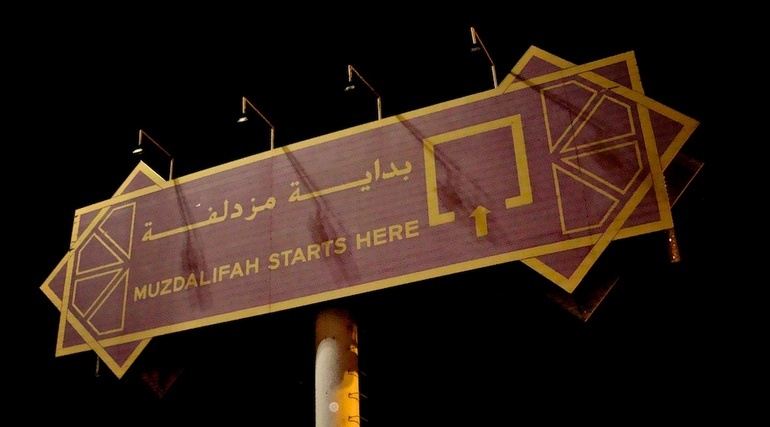
Muzdalifa
Muzdalifah (Arabic: مزدلفة) is an open area located southeast of Mina, on the way between Mina and Arafat. On the 9th Dhul Hijjah (second day of Hajj), pilgrims arrive here after sunset from Arafat and spend the night here.

The Blessed Rawdah - The Green Dome
Garden from the gardens of Paradise, from the Prophet's ﷺ house (the Blessed Chamber) to his pulpit. The Prophet ﷺ says, "Between my house and my pulpit is a meadow of the Paradise." The distance between the pulpit and the blessed chamber is about 26.5 meters. The yellow copper enclosure around the Blessed Chamber obscures part of the Rawdah behind the chamber. So, excluding the detached part, the Rawdah from the pulpit to the copper enclosure is 22 meters long and 15 meters wide.

Jurana Mosque (Masjid Ji'ranah)
Jurana Mosque or Masjid Ji'ranah is written in Arabic as مسجد الجعرانة, where Prophet Muhammad (ﷺ) entered Ihram after the Battle of Hunayn. It is sometimes called Masjid al-Ji'rranah or Masjid Ja'ranah.

Masjid Aisha “Umm al-Mumineen”(Masjid Al-Taneem)
Masjid Aisha عائشة مسجد, where Ummul-Mu’mineen Aisha (رضي الله عنها) went to enter into Ihram. She was instructed to do so by the Prophet (ﷺ) during the Farewell Hajj.. This mosque lies on the edge of Mecca & so is often used to put on Ihram during the Hajj. Masjid Aisha is the closest of all the Miqats (boundary points) of the Haram, the area of Makkah within which certain lawful things are considered unlawful elsewhere. Jaabir (رضي الله عنه) reports that because Aisha (رضي الله عنها) was experiencing menstrual cycle the Prophet (ﷺ) instructed her to perform all the various rites of Hajj except for the tawaf. She then performed the tawaf after her cycle had ended. She then said, “O Rasulullah (ﷺ)! While you have performed Hajj and Umrah, I have performed only Hajj.” The Prophet (ﷺ) then instructed her brother Abdur-Rahman (رضي الله عنه) to take her to Tan’eem and it was from there that she performed her Umrah after her Hajj during the month of Dhul Hijjah.
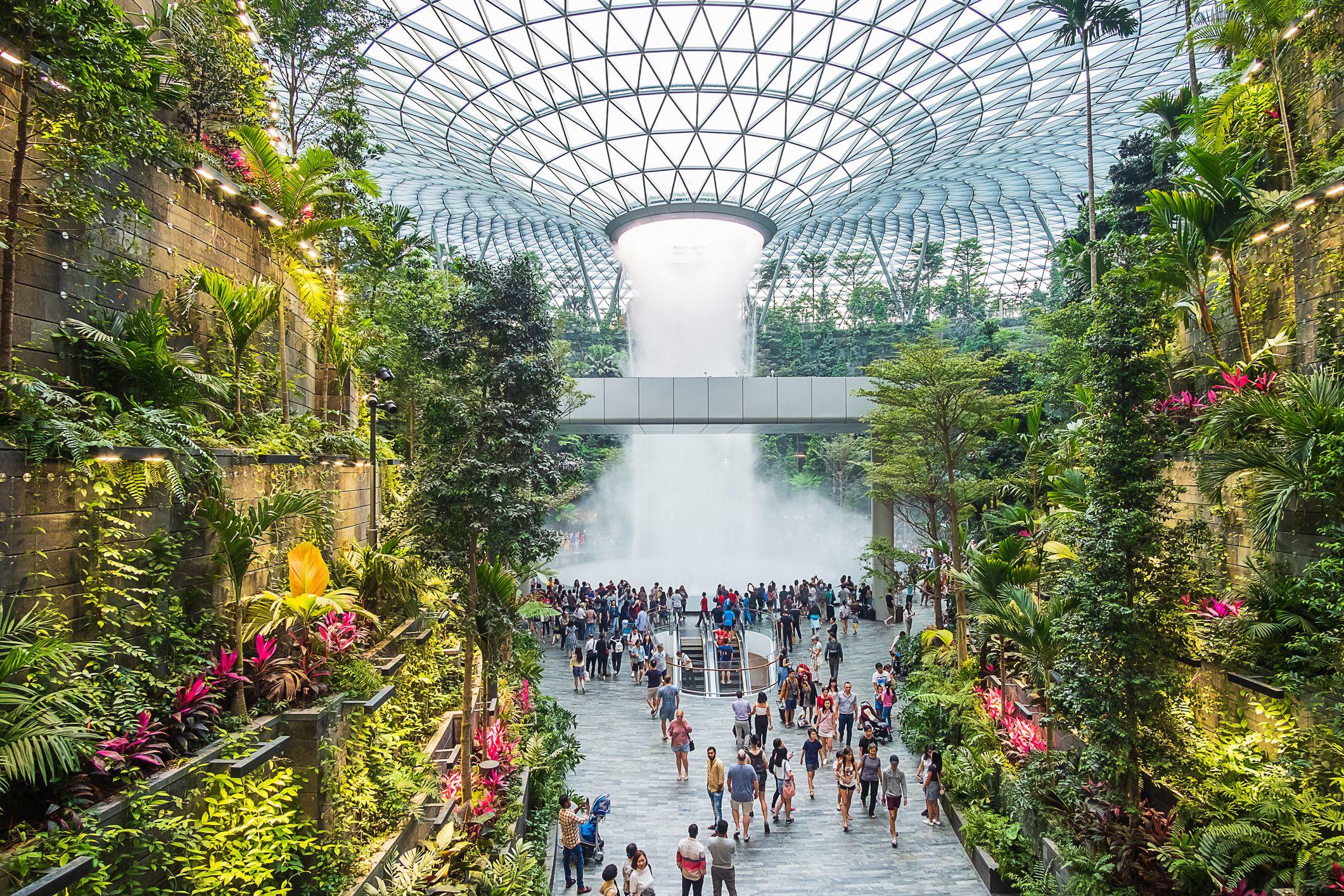
Changi Airport Singapore
Changi Airport is the main international airport of Singapore, and functions as one of the most significant aviation gateways in the Asia-Pacific region
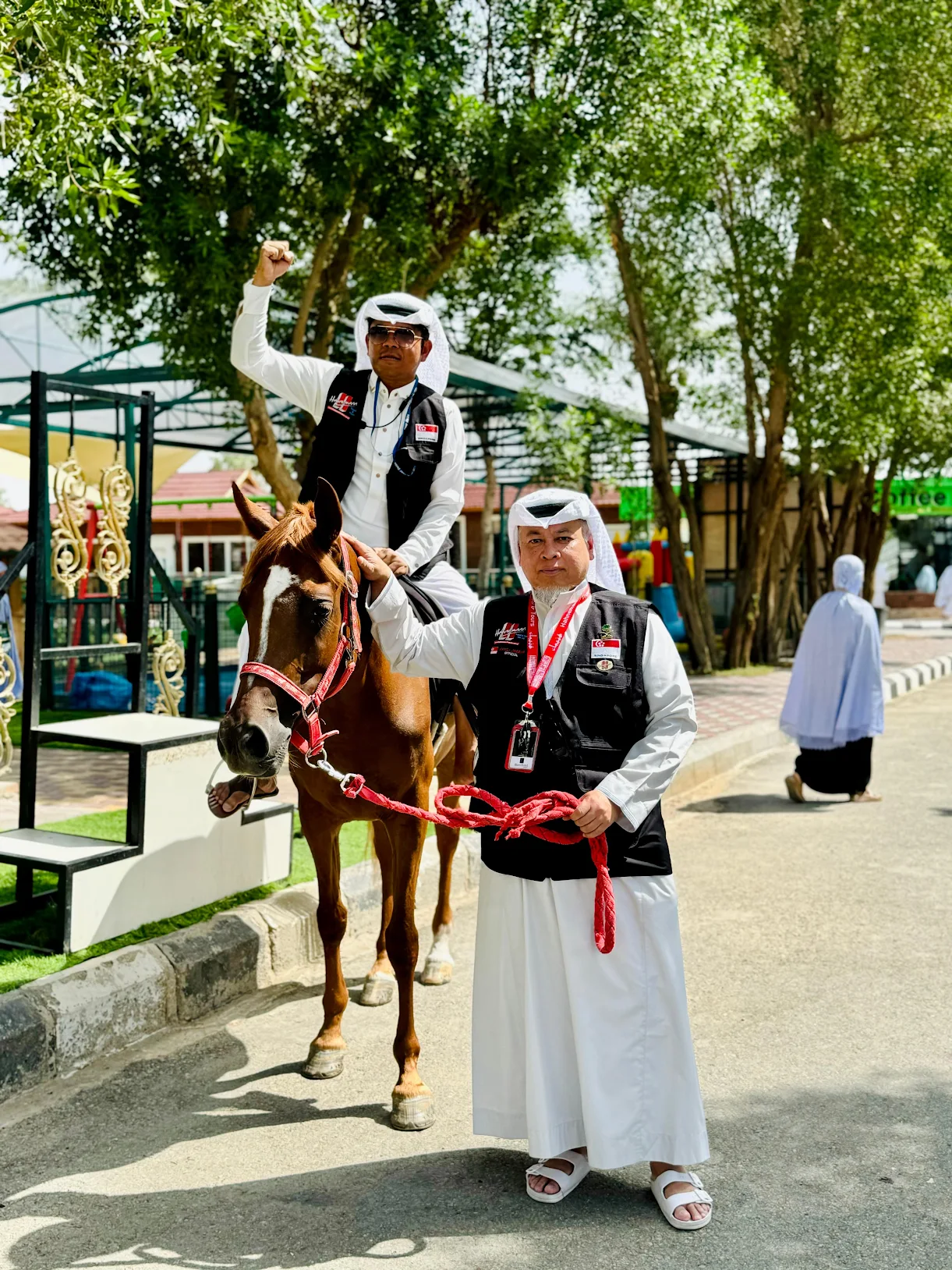
Wadi D Fajr
Activities:Visitors can ride Arabian horses, play Sepak takraw and practice traditional archery, which includes options for horseback archery.Animal Interactions:The site offers camel riding and allows guests to feed and interact with various local farm animals, sheeps, cats etc.Date Palm Climbing:Guests have the opportunity to experience climbing traditional date palm trees.Southeast Asian Cuisine:To cater to international pilgrims, the area features food stalls serving familiar Malaysian dishes such as Roti Canai, Nasi Lemak, Mee Goreng, and Teh Tarik.Historical Proximity:It provides a convenient leisure break situated right next to the historically significant grounds of Hudaibiyah.
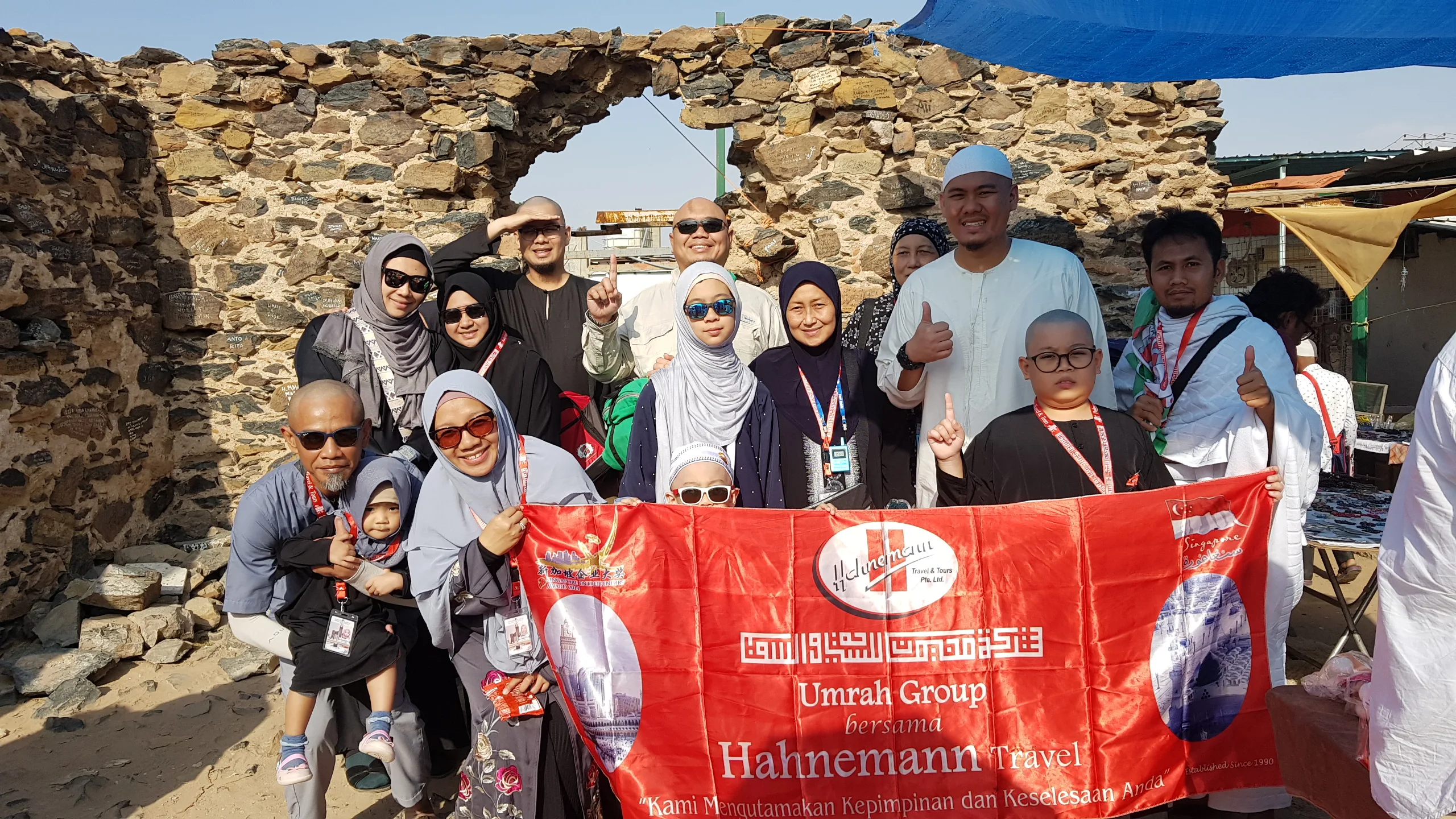
Al Hudaibiyyah Mosque
• The Location of the Treaty:Masjid al-Hudaibiyah (also known today as Masjid al-Shumaisi) marks the exact historical location where the landmark Treaty of Hudaibiyah (Sulh al-Hudaibiyah) was signed in 6 AH (628 CE) between Prophet Muhammad (ﷺ) and the pagan Quraysh elite.• The Scene of the Pledge of Ridwan:Beneath an acacia tree at this very spot, 1,400 to 1,500 companions placed their hands over the Prophet's (ﷺ) hand, swearing an absolute oath of allegiance to fight to the death.This happened after false rumors circulated that Uthman ibn Affan (رضي الله عنه) had been assassinated inside Makkah while serving as an envoy.• A "Clear Victory" Declared by Allah:Though the treaty's physical terms originally seemed humiliating to some companions—such as delaying their Umrah and returning to Madinah—Allah revealed the opening of Surah Al-Fath right after leaving the valley, proclaiming the peace treaty to be a Fath Mubin (Clear Victory).The truce allowed Islam to spread rapidly in times of peace, directly paving the way for the bloodless conquest of Makkah two years later.• The Site of a Grand Prophetic Miracle:Hudaibiyah was the location of a famous water miracle. Faced with a completely dried-out well and an army crying out from intense thirst, the Prophet (ﷺ) rinsed his mouth into the well and supplicated, causing water to gush forth until the entire army and all their animals were satisfied.• Modern Legal Function as a Miqat:Beyond its historical status, the location serves an active legal purpose in Islamic jurisprudence today.It sits right on the boundary line of Adna al-Hill (the nearest edge outside the sacred sanctuary).For residents or pilgrims already inside Makkah who wish to make a subsequent or secondary Umrah, it acts as a valid Miqat to enter the state of Ihram before traveling back to the Kaaba.• The Trees of Allegiance:Scholars point out an important lesson in preventing polytheistic innovations (Bida').During the Caliphate of Umar ibn al-Khattab (رضي الله عنه), he noticed that some Muslims began traveling to Hudaibiyah specifically to seek blessings (Tabarruk) from the tree where the pledge took place.Fearing this would degenerate into idol worship, Umar ordered the tree to be cut down, setting a legal precedent that physical landmarks are preserved for historical reflection, not spiritual veneration.• The Miqat Demarcation Rule:Authoritative fatwas reiterate that if a person is traveling from Jeddah toward Makkah to perform Umrah, Hudaibiyah sits on their path.If they pass it without entering into the state of Ihram despite having the intention, they must physically travel back out to the boundary line to make amends, or else offer a sacrificial sheep in Makkah to rectify their error.• Preserving the Ruins:The site features two structural elements:the ruins of the older, stone Abbasid-era mosque built near the well, and the modern, active mosque complex functioning right beside it for modern pilgrims.Definitive Hadith and Reference LinksThe detailed operational events of the caravan setting out, the she-camel Al-Qaswa' refusing to move, and the water miracle are captured across the canonical books on Sunnah.com:• The Comprehensive Treaty Context:The long, primary narration containing the complete political negotiations with Suhail ibn Amr and the caravan's arrival at the valley is found in Sahih al-Bukhari 2731, 2732(The Book of Conditions / كتاب الشروط).• The Prophetic Well Miracle:The eyewitness testimony of the companions drawing endless water from the dry pit after the Prophet (ﷺ) blessed it is indexed under Sahih al-Bukhari 3577(The Book of Virtues and Merits / كتاب المناقب).• The Virtue of the Companions:The declaration protecting those who stood at Hudaibiyah from the fires of hell is highlighted in the collections on Daily Hadith Online (Hudaybiyyah),mapping back to the Prophet’s words:"None of the companions who gave the pledge of allegiance under the tree at Hudaybiyyah will enter the Hellfire."
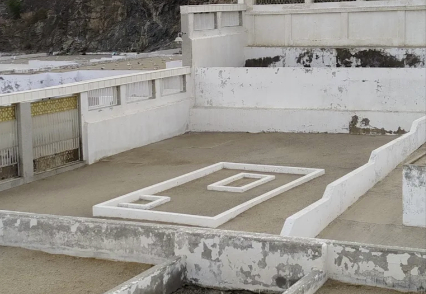
Al Muallaa Cemetery
Mu‘allaa Cemetery, Makkah ==> Rasulullahs ﷺ wife, Khadijah and Rasulullah's ﷺ Son, Qasim are buried- 🪦 A historic cemetery associated with the Prophet’s ﷺ family. Also called Jannat al-Mu‘allaa or al-Hajun,it is traditionally identified as the burial place of several of his relatives.These burial identifications come from historical accounts; they should not all be presented as facts established by the Qur’an or authentic hadith.-🌷 Khadijah bint Khuwaylid (رضي الله عنها). The Prophet’s ﷺ first wife is historically reported to be buried here.Her religious distinction is firmly established:Jibril brought her greetings from Allah and conveyed glad tidings of a home in Paradise free from disturbance and fatigue.Sahih al-Bukhari 3820.This establishes her virtue, without establishing a special reward for visiting her grave.- 📖 Connection to a Mother of the Believers. Khadijah (رضي الله عنها) belongs to the honoured wives of the Prophet ﷺ, whom Allah describes as the believers’ mothers. Qur’an 33:6.The verse concerns their status; it does not mention this cemetery- 👶 Al-Qasim and ‘Abdullah. Historical accounts list the Prophet’s ﷺ two sons from Khadijah (رضي الله عنها) among those buried here.Both died young;‘Abdullah is commonly identified by the names al-Tayyib and al-Tahir.These are historical and biographical details, rather than cemetery-specific Qur’anic or hadith promises. Muslim and Quran- 🌳 Abu Talib and ‘Abd al-Muttalib. The Prophet’s ﷺ uncle and grandfather are also traditionally listed among those buried here.Their family relationship should not be taken to mean that they were Sahabah. In particular,Sahih al-Bukhari 3884 records that Abu Talib did not accept Islam at his death.- 👥 Association with the Sahabah. Historical accounts also identify Companions such as ‘Abdullah ibn al-Zubayr (رضي الله عنه) with this cemetery.- ⏳ A reminder of death and the Hereafter.The Prophet ﷺ encouraged visiting graves because they remind people of death. Sahih Muslim 976b.Allah also reminds us that every soul will taste death.Qur’an 3:185.These teachings apply generally to cemeteries, including Mu‘allaa.- 🤲 An opportunity to greet and supplicate for deceased Muslims.The Sunnah teaches visitors to offer peace to the believing occupants and ask Allah for well-being for themselves and the deceased. Sahih Muslim 975.Supplication is directed to Allah.- 🕌 Islam guidance on visiting grave.Rasulullah ﷺ recommends grave visitation for men for remembrance and supplication,without undertaking a special religious journey solely to visit graves.Its adopted position prohibits women’s grave visitation; scholars differ on this issue.
Abdullah Ibn Abbas Mosque
‘Abdullah ibn ‘Abbas Mosque, Ta’if- 🕌 A historic mosque in central Ta’if.The mosque is an important local landmark associated with Islamic scholarship and the memory of ‘Abdullah ibn ‘Abbas (رضي الله عنهما).It has undergone several reconstructions and expansions over the centuries. مسجد عبدالله بن عباس- 🌳 Named after the Prophet’s ﷺ cousin and Companion.Ibn ‘Abbas was the son of al-‘Abbas ibn ‘Abd al-Muttalib, the Prophet’s ﷺ paternal uncle.A distinguished scholar of the Sahabah, renowned for his understanding of the religion and the Qur’an.- 🤲 The Prophet ﷺ prayed for his understanding of Islam.After Ibn ‘Abbas prepared water for him, the Prophet ﷺ supplicated:“O Allah! Grant him understanding of the religion.”Sahih al-Bukhari 143This establishes Ibn ‘Abbas’s virtue, rather than a special virtue of the mosque named after him.- 📖 Honoured for his knowledge of the Qur’an.The Prophet ﷺ embraced Ibn ‘Abbas and asked Allah to teach him wisdom;another narration mentions teaching him the Book. Sahih al-Bukhari 3756 and 3756b.He became known as Tarjuman al-Qur’an, the interpreter of the Qur’an.- 🪦 Connected to his final years and burial.Ibn ‘Abbas lived in Ta’if towards the end of his life and died there in 68 AH.His burial is associated with the area adjoining the mosque.- 📚 A longstanding centre of Islamic learning.Historical accounts describe the mosque as a place where students studied tafsir, hadith, Islamic jurisprudence and Arabic, attracting learners from different parts of the Muslim world. مسجد عبدالله بن عباس- 🏛️ Historical links to early Islam in Ta’if.Mosque has origins with a location where the Prophet ﷺ prayed during the siege of Ta’if, and associates the neighbouring cemetery with Companions killed during that siege.These are historical reports; no verified authentic hadith establishing the precise site or the individual graves. مسجد عبدالله بن عباس- ✅ IslamQA’s ruling on praying beside a separate graveyard.In answer 161548, IslamQA specifically cites the Ta’if mosque associated with Ibn ‘Abbas: prayer is not disliked when a separating wall places the grave outside the mosque’s boundaries.The ruling distinguishes an adjoining grave from a grave incorporated into a mosque. الإسلام سؤال وجواب- 🕋 Worship is directed to Allah alone.Qur’an 72:18 teaches that places of worship belong to Allah and that no one should be invoked alongside Him.Honour Ibn ‘Abbas by learning from his scholarship and praying to Allah, including asking Allah to have mercy on him.
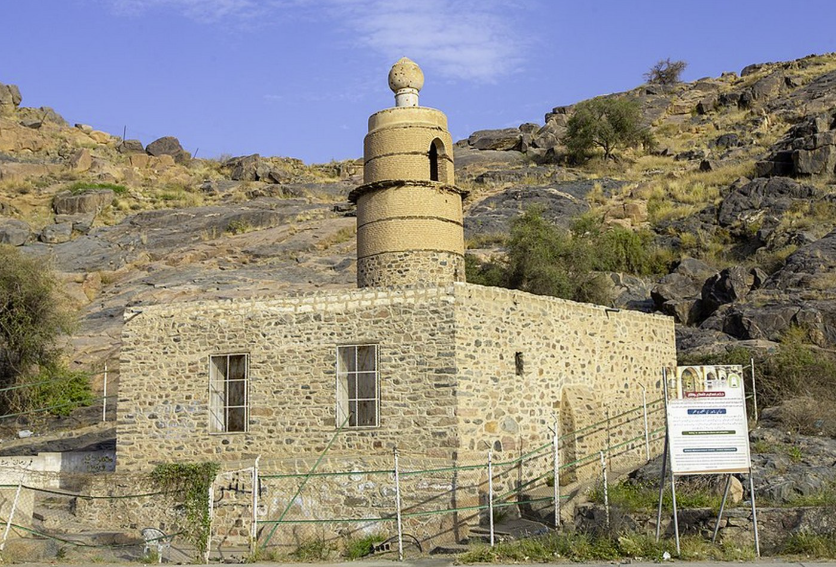
Alkou’ Mosque
Masjid al-Kou’ (Masjid al-Ku, or Masjid al-Mawqif) is a small historic mosque located in the Al-Mathnah neighborhood near Mount Abu Zubaydah in Ta'if.No Authentic Proof for the Specific Spot. Islamic researchers state that no authentic Hadith or early historical record confirms this specific building or rock as a spot where the Prophet (ﷺ) sat or prayed. The structure dates back centuries after his lifetime (such as the Abbasid or Ottoman eras).Sahih al-Bukhari 3231Aisha (رضي الله عنها) inquired if the Prophet (ﷺ) had encountered a day harder than Uhud, prompting him to share his ordeal with the leaders of Ta'if and his encounter with the Angel of the Mountains, who offered to crush the city with two mountains.The Prophet (ﷺ) replied with mercy, hoping that Allah would bring forth from their descendants those who worship Him alone.Seeking blessings by wiping or venerating unverified historical stones and sites is an innovation (Bid'ah).Tradition associates the site with the Prophet Muhammad’s (ﷺ) difficult journey to Ta'if in the 10th year of prophethood, where he invited the Thaqif tribe to Islam, faced rejection and stoning, and sought refuge nearby.Local folklore suggests the mosque was built over a rock where the exhausted Prophet (ﷺ) rested and leaned his elbow (al-ku')
Al-Shuyukh Taif Rose Factory
Al-Shuyukh Taif Rose Factory (كوفي ومعمل الشيوخ للورد الطائفي) is a prominent local distillery and garden café located along the Al Kur–Al Hada / Wadi Mahram area in Ta'if, Saudi Arabia.Buying Ta'if rose perfume is completely permissible and praiseworthy simply because wearing good fragrance is a SunnahSahih Bukhari, Hadith no 3231:Aisha (رضي الله عنها) asked the Prophet (ﷺ) if he had ever faced a day harder than the Battle of Uhud.He recounted his rejection by the leaders of Ta'if, how he wandered in deep sorrow until reaching Qarn ath-Tha'alib, and how the Angel of the Mountains offered to crush the city between two mountains—which the Prophet (ﷺ) mercifully refused, hoping Allah would bring forth monotheistic worshippers from their descendants.Traditional Distillation:- The facility demonstrates the authentic craft of turning dawn-harvested 30-petal Ta'if roses (Ward Taifi) into concentrated rose oil (Dehn al-Ward), rose water, soaps, and perfumes through traditional high-heat copper pot distillation. Global & Sacred Prestige:- Ta'if rose oil is among the most prized natural fragrances in the world, exported globally to luxury perfumers and traditionally used in the ceremonial washing and perfuming of the Holy Kaaba in Makkah.Actual Botanical History:- Historical and agricultural records show that the 30-petal Damask rose (Rosa × damascena) was introduced to Ta'if centuries after the Prophetic era—most likely brought from Syria, Persia, or the Balkans during the Ottoman period (16th century CE), where it thrived in Ta'if's high-altitude climate.
Restaurant Kindah
Kindah Restaurants (مطاعم كندة الطائف) is a famous & well-known modern restaurant chain in Ta'if (with major branches on Oukaz Street and Al-Wessam),Sahih Bukhari, Hadith No 7152:The people said (to Jundab), "Advise us."He said,"The first thing of the human body to purify is the `Abdomen, so he who can eat nothing but good food (Halal and wholesome Thoyyib; earned lawfully) should do so,and he who does as much as he can that nothing intervene between him and Paradise by not shedding even a handful of blood, (i.e. murdering) should do so."- celebrated for its multi-level dining spaces, rooftop terraces, Middle Eastern charcoal grills, and traditional Egyptian and Arab dishesTaif is also known as an agricultural hub due to its cool mountain climate and fertile valleys.Local dining establishments often source fresh, locally raised lamb (Harri sheep) and mountain-grown fruits (pomegranates, figs, grapes) directly from surrounding farms.
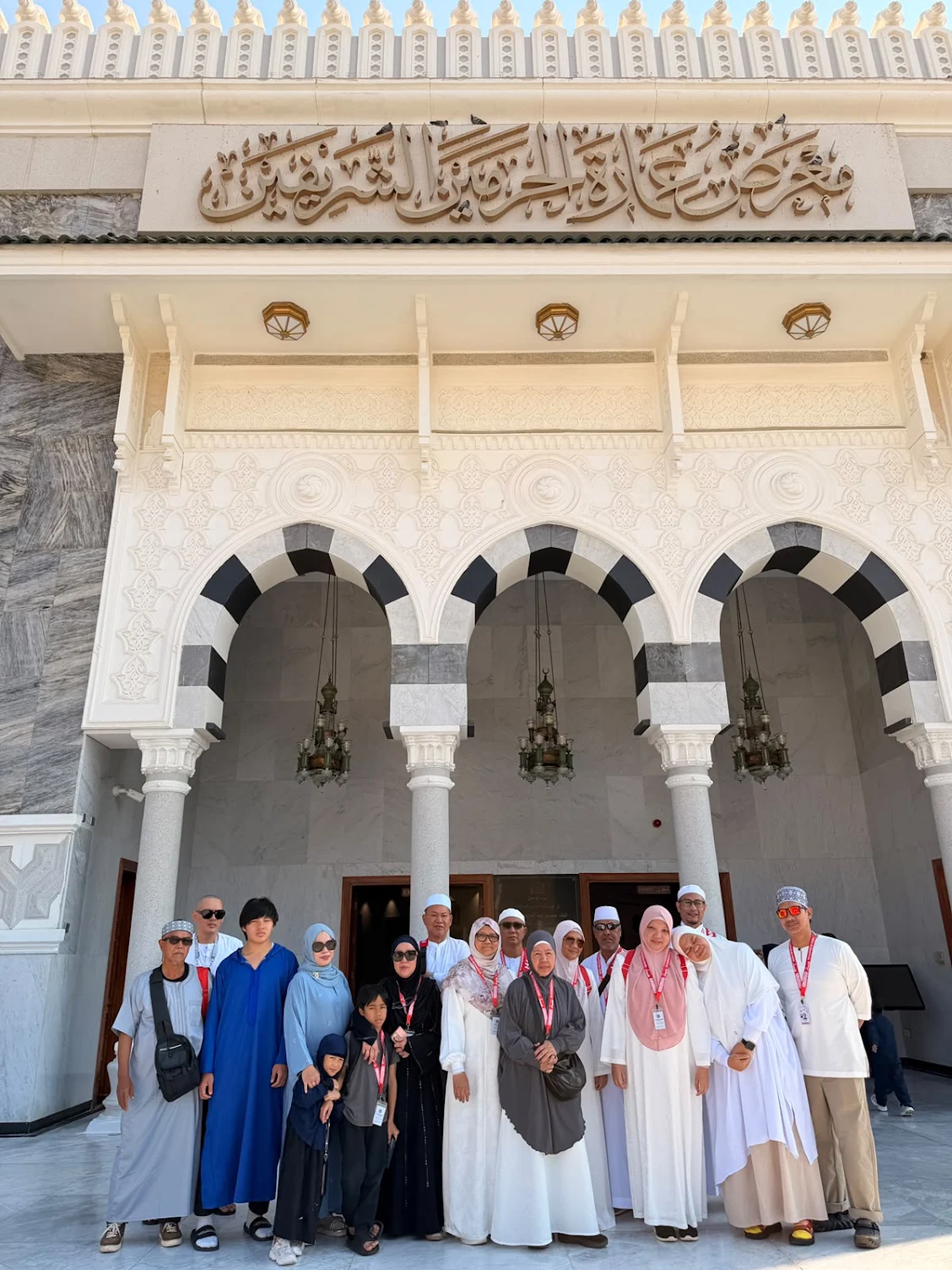
Exhibition of the Two Holy Mosques Architecture
Exhibition of the Two Holy Mosques Architecture ("معرض عمارة الحرمين الشريفين") in Makkah preserves authentic relics from Masjid al-Haram and Masjid al-Nabawi for educational viewingLocation & Purpose:- Established in 2000 in the Al Hamra Umm Al Jud district of Makkah (right beside the King Abdulaziz Complex for the Holy Kaaba Kiswa),- this 1,200-square-meter museum documents the architectural evolution of Masjid al-Haram and Masjid al-Nabawi from early Islam through the Umayyad, Abbasid, Ottoman, and modern Saudi expansionsPriceless Authentic Relics:- Across seven specialized halls, visitors can view irreplaceable structural pieces removed during historical renovations, including:• The Kaaba Pillar of Abdullah ibn al-Zubair. A wooden interior column installed around 65 AH (685 CE).• Kaaba Doors & Spouts. The Kaaba door commissioned by King Abdulaziz in 1363 AH, the 1857 Ottoman water spout (Mizab al-Rahmah), and a 200-year-old teakwood Kaaba staircase.• Ancient Manuscripts & Prophet's Mosque Artifacts. A rare copy of the Uthmanic Qur'an (Mushaf Uthman), a historic Ottoman pulpit (Minbar) from Madinah, and a 19th-century copper bucket from the Zamzam well.Studying Islamic archaeology and visiting museums to reflect on history and learn lessons is completely permissible (Mubah), provided no prohibited acts occur.Scholars emphasize that visiting this exhibition is a cultural and educational activity, not a ritual of Hajj or Umrah. No extra spiritual reward is earned merely by entering the museum.Prohibition of Tabarruk (Seeking Blessings from Relics):- Authoritative scholars strictly warn pilgrims against wiping, kissing, or seeking spiritual blessings (Tabarruk) from old Kaaba doors, pillars, or Kiswa pieces inside display cases.- In Islamic law, physical objects do not transfer divine blessings on their own, and venerating historical artifacts can lead toward polytheistic innovations (Bid'ah).Ban on Animate Statues:- Consistent with rulings on Islam regarding archaeological displays, the exhibition adheres strictly to Islamic guidelines by showcasing calligraphy, geometric models, and architectural fragments without statues of living beings
Jumeirah Jabal Omar Makkah 5*
Featuring 5-star accommodation, Jabal Omar Jumeirah, Makkah is located in Makkah, est 70 m from Masjid Al Haram.Featuring a fitness centre, the 5-star hotel has air-conditioned rooms with free WiFi, each with a private bathroom. The hotel features family rooms.All units in the hotel are equipped with a flat-screen TV. Each room is equipped with a kettle, while selected rooms include a terrace and others also provide guests with city views. At Jabal Omar Jumeirah, Makkah every room is equipped with bed linen and towels.Breakfast is available daily, and includes buffet, American and vegetarian options. At the accommodation you will find a restaurant serving Mediterranean, Middle Eastern and Moroccan cuisine. Vegetarian, vegan and gluten-free options can also be requested.With staff speaking Arabic and English, guidance is available at the reception.Zamzam Well is 4.1 km from Jabal Omar Jumeirah, Makkah, while Makkah Museum is 4.1 km away. The nearest airport is King Abdulaziz International Airport, 92 km from the hotel.Couples particularly like the location — they rated it 8.9 for a two-person trip.
Maden Taiba Premium 5*Hotel | فندق مادن
Maden Taiba Premium 5* Hotel Madinah — est 80metres to Masjidil Nabawi VIP services, dining, and amenities at Maden Hotel. Pinnacle of luxury at Maden Hotel.
Masjid Nabawi
The Prophet's Muhammad ﷺ Mosque is the second mosque built by Rasulullah ﷺ after the Quba Mosque. It is the second holiest site in Islam, after the Masjid al-Haram in Mecca. Every prayer is Masjidil Nabawi is multiplied by 1000x !It also houses the Gardens of Paradise (Ar Rawdah / Raudah) on earth.Sahih Bukhari, Hadith No 1190:Allah's Messenger (ﷺ) said,"One prayer in my Mosque is better than one thousand prayers in any other mosque excepting Al-Masjid-AI-Haram."-https://sunnah.com/bukhari:1190...Sahih Bukhari, hadith No 1196:The Prophet (ﷺ) said,"Between my house and my pulpit there is a garden of the gardens of Paradise (Rawdah),and my pulpit is on my fountain tank (i.e. Al-Kauthar)."-https://sunnah.com/bukhari:1196...Sahih Bukhari, Hadith No 1189:The Prophet (ﷺ) said,"Do not set out on a journey except for three Mosques i.e. Al-Masjid-AI-Haram, the Mosque of Allah's Messenger (ﷺ) ,and the Mosque of Al-Aqsa, (Mosque of Jerusalem)."-https://sunnah.com/bukhari:1189...Sahih Bukhari, Hadith No 1871:Allah's Messenger (ﷺ) said,"I was ordered to migrate to a town which will swallow (conquer) other towns and is called Yathrib and that is Medina,and it turns out (bad) persons as a furnace removes the impurities of iron.-https://sunnah.com/bukhari:1871...Sahih Bukhari, Hadith No 1876:Allah's Messenger (ﷺ) said,"Verily, Belief returns and goes back to Medina as a snake returns and goes back to its hole (when in danger).-https://sunnah.com/bukhari:1876Madinah is the gathering-point of the Muslims in the beginning and at the end. An-Nawawi (may Allah have mercy on him) said:“Faith will retreat to Madinah” – what is meant is that this is how faith is in the beginning and at the end, because at the beginning of Islam, everyone whose faith was sincere and whose Islam was valid came to Madinah, either as a Muhajir (migrant) coming to settle there, or out of a longing to see the Messenger of Allah (ﷺ),andto learn from him and be near to him; then after that, at the time of the caliphs, people did the same, so they came to learn about the straight path from them and follow the example of the majority of the Companions (may Allah be pleased with them) living there;then after that, they came to learn from the scholars of Madinah who were a shining lamp of that era, and the Imams of guidance, to learn Islam and the Sunnah of the Messenger of Allah (ﷺ) that the Companions narrated to subsequent generations….Therefore everyone who was steadfast in faith and at ease with it would travel there. “(Sharh An-Nawawi ‘Ala Muslim, 2/177).Sahih Bukhari, Hadith No 1877:I heard the Prophet (ﷺ) saying,"None plots against the people of Medinabutthat he will be dissolved (destroyed) like the salt is dissolved in water."-https://sunnah.com/bukhari:1877...
Masjid Quba
Spiritual pilgrimage site thought to date from the prophet Muhammad’s time in the 7th century CE.
Salman Al Farsi Farm
Uhud Mountain
Imposing, rocky ridge & site of the 624 CE Battle of Uhud between the Meccan army & early Muslims.
Masjid al-Qiblatayn
Twin-towered mosque where the prophet Muhammad redirected prayer from Jerusalem to Mecca in 624.
The Seven Mosques (Khandaq Mosque)
Striking place of worship with twin minarets backed by rugged cliffs, the site of an ancient battle.
Masjid al-Haram
Known as the Great Mosque of Mecca, is a mosque in Mecca, Saudi Arabia, serving as the holiest and most important mosque in Islam.
Jamrah Al Aqabah Al-Kubra
Mosque of Al-Ghamama
Centuries-old stone mosque said to occupy the site where Prophet Muhammad performed the Eid prayer.
Al Baqi Cemetery
Jannatul Baqi is the oldest and most sacred Islamic cemetery in Medina. It holds over 10,000 companions of Prophet Muhammad (PBUH), including many family members and early leaders, with graves marked only by simple stones. 4th Caliph Uthman ibn Affan, Ahl al-Bayt members such as Hasan ibn Ali, daughters Zainab, Rukayya, and Umm Kulthum, along with Imam Zayn al-Abidin, Imam Muhammad al-Baqir, and Imam Ja'far al-Sadiq. Many wives of the Prophet (Aisha, Umm Salama, others) and his aunt Safiyyah are also buried here
Wadi al-Baida (Valley of Jinn)
Wadi al-Baida, locally known as Wadi al-Jinn, is a valley and an anti-gravity hill in al-Baida Park located approximately 30 kilometers northwest of Medina in the Medina Province of Saudi Arabia. It is renowned for a "gravity hill" phenomenon where vehicles in neutral gear appear to move uphill on their own, often attributed to optical illusions or magnetic anomalies.
Railway Museum (Hijaz Railway Museum)
Historic Ottoman train station showcasing antique train cars & relics from Medina's heritage. The station was opened in 1326 AH (1908), and it is one of the railway’s most prominent stations and its nal station. During World War I, the station was intermittently closed until it halted permanently in 1921. The Al-Suqya Mosque is located within the station walls. It was named after the nearby Al-Suqya Well, from which the Prophet Mohammed (ﷺ) performed ablution while heading to the Battle of Badr, prayed, and supplicated for the well-being of the Muslims of Madinah. During his governorship of Madinah, Umar bin Abdul Aziz, may Allah bless his soul, built this mosque on the site where the Prophet (ﷺ) prayed.
The International Fair and Museum of the Prophet's Biography and Islamic Civilization
a world-class interactive museum dedicated to presenting a comprehensive and authentic introduction to the noble life of Prophet Muhammad ﷺ, his values, ethics, and conduct, while highlighting the true message of Islam. The museum is located in the Haram district, adjacent to the Prophet’s Mosque in Madinah, and is supervised by the Muslim World League. It was officially inaugurated on 21 Jumada Al-Akhirah 1442 AH, corresponding to 3 February 2021. The museum houses more than 500 artifacts and crafted pieces related to the Prophetic era, presented through an educational narrative supported by the latest technologies.
As Safiyyah Museum & Park
Creation Story Museum - A digital museum, located on two floors below the garden in As Safiyyah Park & Museum, deals with the story of creation from the beginning, through the creation of the universe and the sending of the prophets, until the end of the world, through a narrative that juxtaposes the latest display technologies, in a dazzling experience for visitors.
Haramain High Speed Railway Depot (Medina)
The Haramain High Speed Railway (HHR) depot in Medina, completed in 2016, is a major maintenance and operational hub featuring three large buildings, 24 railway tracks across four yards, and specialized workshops. This facility ensures the technical maintenance of trains traveling up to 300km/h between Medina, Mecca, Jeddah, and KAEC.
Haramain Train Station (Makkah)
The Haramain High Speed Railway connects Makkah and Madinah, with stops in Jeddah, supporting the growing demand for efficient transport for pilgrims, visitors, and residents travelling between Saudi’s major cities. Makkah Station A terminal station serving as a key arrival and departure point for travellers between the holy cities, equipped with travel halls, prayer facilities, parking, and commercial services.
Thowr Mountain (Jabal Thur / Thawr)
Jabal Thawr (Arabic: جَبَل ثَوْر) is a mountain in Saudi Arabia, located in the lower part of Mecca to the south of the district of Misfalah. The mountain is notable for housing a cave known as Ghār Thawr (Arabic: غَار ثَوْر), in which the Islamic prophet Muhammad ﷺ took refuge from the Quraysh, during the migration to Medina. Truth about dove nest and spider web = https://islamqa.info/en/answers/27224/overnight-stay-of-the-prophet-(peace-and-blessings-of-allaah-be-upon-him)-and-abu-bakr-in-the-cave-of-thawr
Masjid Al Nimrah (Masjid Namirah)
Masjid an-Namirah or Masjid Nimrah is a mosque in Wadi Uranah near Mecca in the Hejazi region of Saudi Arabia. • Site of the Farewell Sermon:Masjid Namirah (also spelled Namrah or Nimra) is a historic monument located near the plains of Arafat,- marking the exact location where Prophet Muhammad (ﷺ) pitched his tent,- stood at valley (Batn ‘Uranah) to deliver the Farewell Sermon (Khutbat al-Wida') to over 100,000 companions and led the prayers during his Farewell Hajj in 10 AH.• The Rejection of Pre-Islamic Paganism (Jahiliyyah):- In the immediate vicinity of this valley, pagan Arabs historically held distinct, elitist rituals during the pre-Islamic era.- Tribes who considered themselves elite (Al-Hums) refused to go out to the plains of Arafat like common tribes, staying inside the sanctuary borders instead.- By camping at Namirah and preaching down in the valley of 'Uranah, the Prophet (ﷺ) physically shattered these structural class systems.- He (ﷺ) established a universal standard of equality, declaring on this exact dirt: "An Arab has no superiority over a non-Arab, nor a white over a black, except by piety (Taqwa)."• The "One-Day" Mosque:While it stands as the second-largest mosque in the Makkah province (accommodating up to 400,000 worshippers), it remains empty for virtually the entire year.It springs to life exclusively on the 9th of Dhul-Hijjah (the Day of Arafah) for a single afternoon.• Alternative Historical Names:To demonstrate its profound theological weight, classical historians note that the site has been known by three other major names:1. Masjid Ibrahim al-Khalil (The Mosque of Abraham): (Arabic: مسجد إبراهيم الخليل)- because the Prophet Muhammad's (ﷺ) actions on this exact site were a direct restoration of the original, uncorrupted monotheistic Hajj legacy pioneered by Prophet Ibrahim (peace be upon him) centuries prior.2. Masjid al-Tawbah (The Mosque of Repentance):- Commemorating the mass spiritual clean-slate achieved by the 100,000+ companions who wept and repented together behind the Prophet (ﷺ) on that afternoon.3. Masjid 'Arafah: (Arabic: مسجد عرفة)- Due to its direct visual connection and proximity to the sacred plain.4. Masjid Uranah (Arabic: مسجد عرنة)- because the entire front section of the mosque—including the Mihrab (prayer niche) and the Minbar (pulpit)—is physically located inside Wadi ‘Urana- the name Uranah refers to the valley that sits outside the legal boundaries of Arafat, calling it Masjid Uranah highlights the vital Hajj boundary rule• The Trans-Boundary Dilemma:The mosque possesses a unique geographic layout. The front section sits inside Wadi ‘Uranah (which is outside the legal boundary of Arafat), while the back portion is situated directly within the borders of Arafat.Hahnemann Travel SingaporeWhatsapp +65 9775 2605It also has several other names, including: Masjid Ibrahim al-Khalil (Arabic: مسجد إبراهيم الخليل)Masjid Arafah (Arabic: مسجد عرفة)Masjid Uranah (Arabic: مسجد عرنة)On the Day of Arafat (9th of Dhul Hijjah), Hajj pilgrims travel from Mina to Arafat. After arriving in Arafat, pilgrims gather at Masjid Nimra where the Imam delivers a sermon.
Mount Arafat
The word Arafat is ‘to know’. Arafah (عرفة) is the name of the day, and Arafat (عرفات) is the name of the land. Standing at Arafat land is a fundamental requirement of Hajj on the 9th of Dhul Hiijjah. Whoever misses the standing on Arafat has missed Hajj, because the Prophet (ﷺ) said: “Hajj is Arafat.” [al-Hakim] . The day of Arafat has many virtues, as was narrated in many Ahadith. Aisha (رضي الله عنها) narrated that the Prophet (ﷺ) said: “There is no day in which Allah sets free more souls from the fire of hell than on the day of Arafat. And on that day Allah draws near to the earth and by way of exhibiting His Pride remarks to the angels, ‘What is the desire of these (servants of mine)?'” [Sahih Muslim]
Muzdalifa
Muzdalifah (Arabic: مزدلفة) is an open area located southeast of Mina, on the way between Mina and Arafat. On the 9th Dhul Hijjah (second day of Hajj), pilgrims arrive here after sunset from Arafat and spend the night here.
The Blessed Rawdah - The Green Dome
Garden from the gardens of Paradise, from the Prophet's ﷺ house (the Blessed Chamber) to his pulpit. The Prophet ﷺ says, "Between my house and my pulpit is a meadow of the Paradise." The distance between the pulpit and the blessed chamber is about 26.5 meters. The yellow copper enclosure around the Blessed Chamber obscures part of the Rawdah behind the chamber. So, excluding the detached part, the Rawdah from the pulpit to the copper enclosure is 22 meters long and 15 meters wide.
Jurana Mosque (Masjid Ji'ranah)
Jurana Mosque or Masjid Ji'ranah is written in Arabic as مسجد الجعرانة, where Prophet Muhammad (ﷺ) entered Ihram after the Battle of Hunayn. It is sometimes called Masjid al-Ji'rranah or Masjid Ja'ranah.
Masjid Aisha “Umm al-Mumineen”(Masjid Al-Taneem)
Masjid Aisha عائشة مسجد, where Ummul-Mu’mineen Aisha (رضي الله عنها) went to enter into Ihram. She was instructed to do so by the Prophet (ﷺ) during the Farewell Hajj.. This mosque lies on the edge of Mecca & so is often used to put on Ihram during the Hajj. Masjid Aisha is the closest of all the Miqats (boundary points) of the Haram, the area of Makkah within which certain lawful things are considered unlawful elsewhere. Jaabir (رضي الله عنه) reports that because Aisha (رضي الله عنها) was experiencing menstrual cycle the Prophet (ﷺ) instructed her to perform all the various rites of Hajj except for the tawaf. She then performed the tawaf after her cycle had ended. She then said, “O Rasulullah (ﷺ)! While you have performed Hajj and Umrah, I have performed only Hajj.” The Prophet (ﷺ) then instructed her brother Abdur-Rahman (رضي الله عنه) to take her to Tan’eem and it was from there that she performed her Umrah after her Hajj during the month of Dhul Hijjah.
Changi Airport Singapore
Changi Airport is the main international airport of Singapore, and functions as one of the most significant aviation gateways in the Asia-Pacific region
Wadi D Fajr
Activities:Visitors can ride Arabian horses, play Sepak takraw and practice traditional archery, which includes options for horseback archery.Animal Interactions:The site offers camel riding and allows guests to feed and interact with various local farm animals, sheeps, cats etc.Date Palm Climbing:Guests have the opportunity to experience climbing traditional date palm trees.Southeast Asian Cuisine:To cater to international pilgrims, the area features food stalls serving familiar Malaysian dishes such as Roti Canai, Nasi Lemak, Mee Goreng, and Teh Tarik.Historical Proximity:It provides a convenient leisure break situated right next to the historically significant grounds of Hudaibiyah.
Al Hudaibiyyah Mosque
• The Location of the Treaty:Masjid al-Hudaibiyah (also known today as Masjid al-Shumaisi) marks the exact historical location where the landmark Treaty of Hudaibiyah (Sulh al-Hudaibiyah) was signed in 6 AH (628 CE) between Prophet Muhammad (ﷺ) and the pagan Quraysh elite.• The Scene of the Pledge of Ridwan:Beneath an acacia tree at this very spot, 1,400 to 1,500 companions placed their hands over the Prophet's (ﷺ) hand, swearing an absolute oath of allegiance to fight to the death.This happened after false rumors circulated that Uthman ibn Affan (رضي الله عنه) had been assassinated inside Makkah while serving as an envoy.• A "Clear Victory" Declared by Allah:Though the treaty's physical terms originally seemed humiliating to some companions—such as delaying their Umrah and returning to Madinah—Allah revealed the opening of Surah Al-Fath right after leaving the valley, proclaiming the peace treaty to be a Fath Mubin (Clear Victory).The truce allowed Islam to spread rapidly in times of peace, directly paving the way for the bloodless conquest of Makkah two years later.• The Site of a Grand Prophetic Miracle:Hudaibiyah was the location of a famous water miracle. Faced with a completely dried-out well and an army crying out from intense thirst, the Prophet (ﷺ) rinsed his mouth into the well and supplicated, causing water to gush forth until the entire army and all their animals were satisfied.• Modern Legal Function as a Miqat:Beyond its historical status, the location serves an active legal purpose in Islamic jurisprudence today.It sits right on the boundary line of Adna al-Hill (the nearest edge outside the sacred sanctuary).For residents or pilgrims already inside Makkah who wish to make a subsequent or secondary Umrah, it acts as a valid Miqat to enter the state of Ihram before traveling back to the Kaaba.• The Trees of Allegiance:Scholars point out an important lesson in preventing polytheistic innovations (Bida').During the Caliphate of Umar ibn al-Khattab (رضي الله عنه), he noticed that some Muslims began traveling to Hudaibiyah specifically to seek blessings (Tabarruk) from the tree where the pledge took place.Fearing this would degenerate into idol worship, Umar ordered the tree to be cut down, setting a legal precedent that physical landmarks are preserved for historical reflection, not spiritual veneration.• The Miqat Demarcation Rule:Authoritative fatwas reiterate that if a person is traveling from Jeddah toward Makkah to perform Umrah, Hudaibiyah sits on their path.If they pass it without entering into the state of Ihram despite having the intention, they must physically travel back out to the boundary line to make amends, or else offer a sacrificial sheep in Makkah to rectify their error.• Preserving the Ruins:The site features two structural elements:the ruins of the older, stone Abbasid-era mosque built near the well, and the modern, active mosque complex functioning right beside it for modern pilgrims.Definitive Hadith and Reference LinksThe detailed operational events of the caravan setting out, the she-camel Al-Qaswa' refusing to move, and the water miracle are captured across the canonical books on Sunnah.com:• The Comprehensive Treaty Context:The long, primary narration containing the complete political negotiations with Suhail ibn Amr and the caravan's arrival at the valley is found in Sahih al-Bukhari 2731, 2732(The Book of Conditions / كتاب الشروط).• The Prophetic Well Miracle:The eyewitness testimony of the companions drawing endless water from the dry pit after the Prophet (ﷺ) blessed it is indexed under Sahih al-Bukhari 3577(The Book of Virtues and Merits / كتاب المناقب).• The Virtue of the Companions:The declaration protecting those who stood at Hudaibiyah from the fires of hell is highlighted in the collections on Daily Hadith Online (Hudaybiyyah),mapping back to the Prophet’s words:"None of the companions who gave the pledge of allegiance under the tree at Hudaybiyyah will enter the Hellfire."
Al Muallaa Cemetery
Mu‘allaa Cemetery, Makkah ==> Rasulullahs ﷺ wife, Khadijah and Rasulullah's ﷺ Son, Qasim are buried- 🪦 A historic cemetery associated with the Prophet’s ﷺ family. Also called Jannat al-Mu‘allaa or al-Hajun,it is traditionally identified as the burial place of several of his relatives.These burial identifications come from historical accounts; they should not all be presented as facts established by the Qur’an or authentic hadith.-🌷 Khadijah bint Khuwaylid (رضي الله عنها). The Prophet’s ﷺ first wife is historically reported to be buried here.Her religious distinction is firmly established:Jibril brought her greetings from Allah and conveyed glad tidings of a home in Paradise free from disturbance and fatigue.Sahih al-Bukhari 3820.This establishes her virtue, without establishing a special reward for visiting her grave.- 📖 Connection to a Mother of the Believers. Khadijah (رضي الله عنها) belongs to the honoured wives of the Prophet ﷺ, whom Allah describes as the believers’ mothers. Qur’an 33:6.The verse concerns their status; it does not mention this cemetery- 👶 Al-Qasim and ‘Abdullah. Historical accounts list the Prophet’s ﷺ two sons from Khadijah (رضي الله عنها) among those buried here.Both died young;‘Abdullah is commonly identified by the names al-Tayyib and al-Tahir.These are historical and biographical details, rather than cemetery-specific Qur’anic or hadith promises. Muslim and Quran- 🌳 Abu Talib and ‘Abd al-Muttalib. The Prophet’s ﷺ uncle and grandfather are also traditionally listed among those buried here.Their family relationship should not be taken to mean that they were Sahabah. In particular,Sahih al-Bukhari 3884 records that Abu Talib did not accept Islam at his death.- 👥 Association with the Sahabah. Historical accounts also identify Companions such as ‘Abdullah ibn al-Zubayr (رضي الله عنه) with this cemetery.- ⏳ A reminder of death and the Hereafter.The Prophet ﷺ encouraged visiting graves because they remind people of death. Sahih Muslim 976b.Allah also reminds us that every soul will taste death.Qur’an 3:185.These teachings apply generally to cemeteries, including Mu‘allaa.- 🤲 An opportunity to greet and supplicate for deceased Muslims.The Sunnah teaches visitors to offer peace to the believing occupants and ask Allah for well-being for themselves and the deceased. Sahih Muslim 975.Supplication is directed to Allah.- 🕌 Islam guidance on visiting grave.Rasulullah ﷺ recommends grave visitation for men for remembrance and supplication,without undertaking a special religious journey solely to visit graves.Its adopted position prohibits women’s grave visitation; scholars differ on this issue.
Abdullah Ibn Abbas Mosque
‘Abdullah ibn ‘Abbas Mosque, Ta’if- 🕌 A historic mosque in central Ta’if.The mosque is an important local landmark associated with Islamic scholarship and the memory of ‘Abdullah ibn ‘Abbas (رضي الله عنهما).It has undergone several reconstructions and expansions over the centuries. مسجد عبدالله بن عباس- 🌳 Named after the Prophet’s ﷺ cousin and Companion.Ibn ‘Abbas was the son of al-‘Abbas ibn ‘Abd al-Muttalib, the Prophet’s ﷺ paternal uncle.A distinguished scholar of the Sahabah, renowned for his understanding of the religion and the Qur’an.- 🤲 The Prophet ﷺ prayed for his understanding of Islam.After Ibn ‘Abbas prepared water for him, the Prophet ﷺ supplicated:“O Allah! Grant him understanding of the religion.”Sahih al-Bukhari 143This establishes Ibn ‘Abbas’s virtue, rather than a special virtue of the mosque named after him.- 📖 Honoured for his knowledge of the Qur’an.The Prophet ﷺ embraced Ibn ‘Abbas and asked Allah to teach him wisdom;another narration mentions teaching him the Book. Sahih al-Bukhari 3756 and 3756b.He became known as Tarjuman al-Qur’an, the interpreter of the Qur’an.- 🪦 Connected to his final years and burial.Ibn ‘Abbas lived in Ta’if towards the end of his life and died there in 68 AH.His burial is associated with the area adjoining the mosque.- 📚 A longstanding centre of Islamic learning.Historical accounts describe the mosque as a place where students studied tafsir, hadith, Islamic jurisprudence and Arabic, attracting learners from different parts of the Muslim world. مسجد عبدالله بن عباس- 🏛️ Historical links to early Islam in Ta’if.Mosque has origins with a location where the Prophet ﷺ prayed during the siege of Ta’if, and associates the neighbouring cemetery with Companions killed during that siege.These are historical reports; no verified authentic hadith establishing the precise site or the individual graves. مسجد عبدالله بن عباس- ✅ IslamQA’s ruling on praying beside a separate graveyard.In answer 161548, IslamQA specifically cites the Ta’if mosque associated with Ibn ‘Abbas: prayer is not disliked when a separating wall places the grave outside the mosque’s boundaries.The ruling distinguishes an adjoining grave from a grave incorporated into a mosque. الإسلام سؤال وجواب- 🕋 Worship is directed to Allah alone.Qur’an 72:18 teaches that places of worship belong to Allah and that no one should be invoked alongside Him.Honour Ibn ‘Abbas by learning from his scholarship and praying to Allah, including asking Allah to have mercy on him.
Alkou’ Mosque
Masjid al-Kou’ (Masjid al-Ku, or Masjid al-Mawqif) is a small historic mosque located in the Al-Mathnah neighborhood near Mount Abu Zubaydah in Ta'if.No Authentic Proof for the Specific Spot. Islamic researchers state that no authentic Hadith or early historical record confirms this specific building or rock as a spot where the Prophet (ﷺ) sat or prayed. The structure dates back centuries after his lifetime (such as the Abbasid or Ottoman eras).Sahih al-Bukhari 3231Aisha (رضي الله عنها) inquired if the Prophet (ﷺ) had encountered a day harder than Uhud, prompting him to share his ordeal with the leaders of Ta'if and his encounter with the Angel of the Mountains, who offered to crush the city with two mountains.The Prophet (ﷺ) replied with mercy, hoping that Allah would bring forth from their descendants those who worship Him alone.Seeking blessings by wiping or venerating unverified historical stones and sites is an innovation (Bid'ah).Tradition associates the site with the Prophet Muhammad’s (ﷺ) difficult journey to Ta'if in the 10th year of prophethood, where he invited the Thaqif tribe to Islam, faced rejection and stoning, and sought refuge nearby.Local folklore suggests the mosque was built over a rock where the exhausted Prophet (ﷺ) rested and leaned his elbow (al-ku')
Al-Shuyukh Taif Rose Factory
Al-Shuyukh Taif Rose Factory (كوفي ومعمل الشيوخ للورد الطائفي) is a prominent local distillery and garden café located along the Al Kur–Al Hada / Wadi Mahram area in Ta'if, Saudi Arabia.Buying Ta'if rose perfume is completely permissible and praiseworthy simply because wearing good fragrance is a SunnahSahih Bukhari, Hadith no 3231:Aisha (رضي الله عنها) asked the Prophet (ﷺ) if he had ever faced a day harder than the Battle of Uhud.He recounted his rejection by the leaders of Ta'if, how he wandered in deep sorrow until reaching Qarn ath-Tha'alib, and how the Angel of the Mountains offered to crush the city between two mountains—which the Prophet (ﷺ) mercifully refused, hoping Allah would bring forth monotheistic worshippers from their descendants.Traditional Distillation:- The facility demonstrates the authentic craft of turning dawn-harvested 30-petal Ta'if roses (Ward Taifi) into concentrated rose oil (Dehn al-Ward), rose water, soaps, and perfumes through traditional high-heat copper pot distillation. Global & Sacred Prestige:- Ta'if rose oil is among the most prized natural fragrances in the world, exported globally to luxury perfumers and traditionally used in the ceremonial washing and perfuming of the Holy Kaaba in Makkah.Actual Botanical History:- Historical and agricultural records show that the 30-petal Damask rose (Rosa × damascena) was introduced to Ta'if centuries after the Prophetic era—most likely brought from Syria, Persia, or the Balkans during the Ottoman period (16th century CE), where it thrived in Ta'if's high-altitude climate.
Restaurant Kindah
Kindah Restaurants (مطاعم كندة الطائف) is a famous & well-known modern restaurant chain in Ta'if (with major branches on Oukaz Street and Al-Wessam),Sahih Bukhari, Hadith No 7152:The people said (to Jundab), "Advise us."He said,"The first thing of the human body to purify is the `Abdomen, so he who can eat nothing but good food (Halal and wholesome Thoyyib; earned lawfully) should do so,and he who does as much as he can that nothing intervene between him and Paradise by not shedding even a handful of blood, (i.e. murdering) should do so."- celebrated for its multi-level dining spaces, rooftop terraces, Middle Eastern charcoal grills, and traditional Egyptian and Arab dishesTaif is also known as an agricultural hub due to its cool mountain climate and fertile valleys.Local dining establishments often source fresh, locally raised lamb (Harri sheep) and mountain-grown fruits (pomegranates, figs, grapes) directly from surrounding farms.
Exhibition of the Two Holy Mosques Architecture
Exhibition of the Two Holy Mosques Architecture ("معرض عمارة الحرمين الشريفين") in Makkah preserves authentic relics from Masjid al-Haram and Masjid al-Nabawi for educational viewingLocation & Purpose:- Established in 2000 in the Al Hamra Umm Al Jud district of Makkah (right beside the King Abdulaziz Complex for the Holy Kaaba Kiswa),- this 1,200-square-meter museum documents the architectural evolution of Masjid al-Haram and Masjid al-Nabawi from early Islam through the Umayyad, Abbasid, Ottoman, and modern Saudi expansionsPriceless Authentic Relics:- Across seven specialized halls, visitors can view irreplaceable structural pieces removed during historical renovations, including:• The Kaaba Pillar of Abdullah ibn al-Zubair. A wooden interior column installed around 65 AH (685 CE).• Kaaba Doors & Spouts. The Kaaba door commissioned by King Abdulaziz in 1363 AH, the 1857 Ottoman water spout (Mizab al-Rahmah), and a 200-year-old teakwood Kaaba staircase.• Ancient Manuscripts & Prophet's Mosque Artifacts. A rare copy of the Uthmanic Qur'an (Mushaf Uthman), a historic Ottoman pulpit (Minbar) from Madinah, and a 19th-century copper bucket from the Zamzam well.Studying Islamic archaeology and visiting museums to reflect on history and learn lessons is completely permissible (Mubah), provided no prohibited acts occur.Scholars emphasize that visiting this exhibition is a cultural and educational activity, not a ritual of Hajj or Umrah. No extra spiritual reward is earned merely by entering the museum.Prohibition of Tabarruk (Seeking Blessings from Relics):- Authoritative scholars strictly warn pilgrims against wiping, kissing, or seeking spiritual blessings (Tabarruk) from old Kaaba doors, pillars, or Kiswa pieces inside display cases.- In Islamic law, physical objects do not transfer divine blessings on their own, and venerating historical artifacts can lead toward polytheistic innovations (Bid'ah).Ban on Animate Statues:- Consistent with rulings on Islam regarding archaeological displays, the exhibition adheres strictly to Islamic guidelines by showcasing calligraphy, geometric models, and architectural fragments without statues of living beings
What's Included
- 2-way Economy Flight from Singapore
- 5* Hotels
- Full Board Meals (3x Meals: Breakfast, Lunch, Dinner) International Meals
- 3x Guided Umrah
- Transport, Transfers, Entrance Fees
- 1-way High-Speed Train
- Wireless Audio System Usage (Ziarah, Umrah)
- Group Tour in Malay with Tour Leader, Mutawwif, Ustazah in Rawdah / Umrah
- Umrah Course + Briefing (3x Malay / 1x English)
- Gift Items: Cabin bag, Ihram or Women Jilbab, Shopping bag, Sling bag & Umrah Book
- 5 Litres Zam-zam water (*subject to authorities)
Not Included
- Tips for Driver and Guide, Porters at the airport / hotels / room-cleaning tips / beverages, etc.
- 1-yr Tourist Visa, Saudi Covid Medical Insurance coverage
- Excess Baggage, Travel Insurance (Not required, Optional)
- Injections (Not required, Optional) – e.g. Meningitis, Influenza
Ittinerary Map
Loading Interactive Map...